


Wolfgang Fortner
Released Album
Vocal
-
 May 23, 2011
Chamber
-
 January 8, 2021
 -
-
-
 November 18, 2014
 -
 August 28, 2012
 -
 May, 1995
Symphony
-
 October 31, 2006
Artist Info
Role:Composer ConductorCountry: GermanyBirth:October 12, 1907 in Leipzig, GermanyDeath:1987Period:ModernGenre:ChamberConcertoOperaVocalWolfgang Fortner was a German composer and conductor who was born on July 12, 1907, in Leipzig, Germany. He was the son of a music teacher and grew up in a musical family. Fortner began his musical education at a young age, studying piano and violin with his father. He later studied composition with Hermann Grabner at the Leipzig Conservatory. In 1927, Fortner moved to Munich to study with Carl Orff at the Munich Academy of Music. He also studied with Heinrich Kaminski and Walter Courvoisier. During this time, Fortner became interested in the music of Arnold Schoenberg and the Second Viennese School. He began to incorporate elements of atonality and serialism into his own compositions. Fortner's early works were influenced by the music of Bach, Mozart, and Beethoven. He wrote his first opera, "Bluthochzeit," in 1932, which was based on a play by Federico Garcia Lorca. The opera was well-received and established Fortner as a promising young composer. In 1933, Fortner was appointed as a professor of composition at the Hochschule für Musik in Freiburg. He remained in this position until 1945, when he was dismissed by the Nazi regime for his political views. During this time, Fortner continued to compose and conduct, and his music began to gain recognition outside of Germany. After World War II, Fortner was appointed as the director of the Hochschule für Musik in Freiburg. He remained in this position until 1972, when he retired. During this time, Fortner continued to compose and conduct, and his music became more widely known and performed. Fortner's music is characterized by its use of atonality and serialism, as well as its incorporation of elements of jazz and popular music. His works include operas, ballets, orchestral works, chamber music, and vocal music. Some of his most notable works include the operas "Bluthochzeit," "In seinem Garten liebt Don Perlimplin Belisa," and "Die Bluthochzeit," as well as the ballets "Der zerbrochene Krug" and "Die Weise von Liebe und Tod des Cornets Christoph Rilke." Fortner was also known for his work as a conductor. He conducted many premieres of contemporary music, including works by Schoenberg, Webern, and Berg. He was also a champion of the music of his contemporaries, including Hans Werner Henze and Luigi Nono. Fortner received many awards and honors throughout his career, including the Order of Merit of the Federal Republic of Germany and the Grand Cross of Merit of the Federal Republic of Germany. He died on September 5, 1987, in Heidelberg, Germany, at the age of 80. In conclusion, Wolfgang Fortner was a prominent German composer and conductor who was known for his use of atonality and serialism in his compositions. His works include operas, ballets, orchestral works, chamber music, and vocal music. He was also a champion of contemporary music and conducted many premieres of works by his contemporaries. Fortner's contributions to the world of classical music continue to be recognized and celebrated today.More....
Recent Artist Music

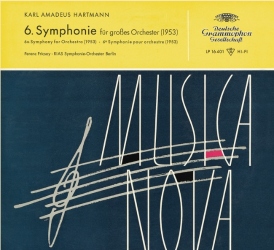
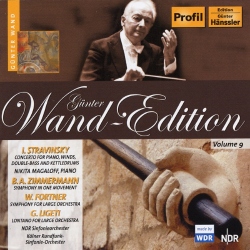
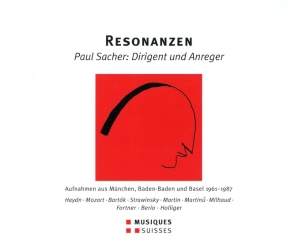
5
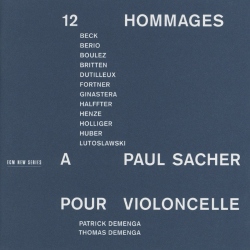
7:39
8
9:34
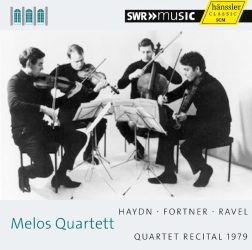
13
Mid-life
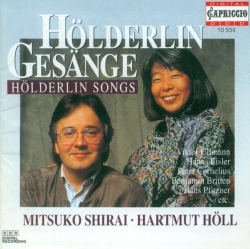
Mitte des Lebens, cantata on words of the late Hölderlin, for soprano and five instruments
13:1
15
1:18
Copyright Ⓒ 2013 Davinci Finger. All rights reseved
Service Terms & Policy