


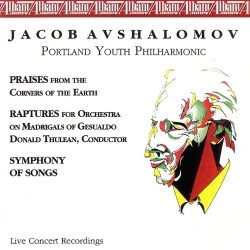
Jacob Avshalomov
Released Album
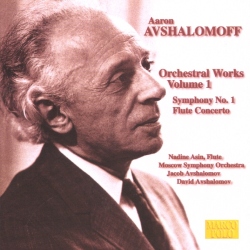
Orchestral
-
 December, 1994
 -
 June 13, 1994
 -
Concerto
-
 June 25, 2002
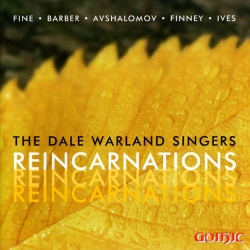
Choral
-
 March 1, 2006
 -
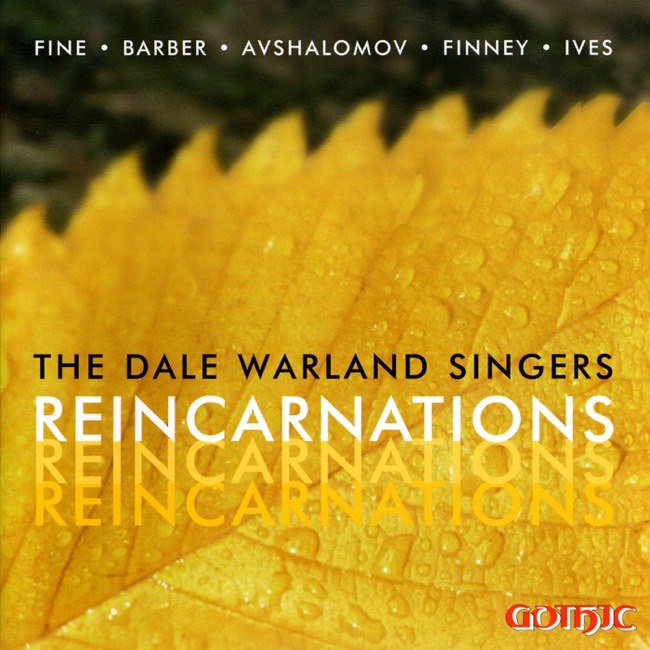 September 7, 2004
Artist Info
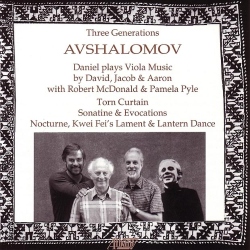
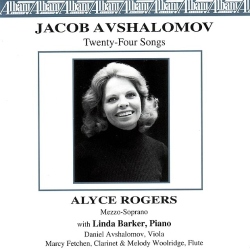
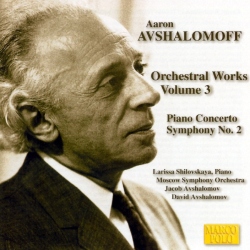
Role:Composer ConductorCountry: United States of AmericaBirth:March 28, 1919 in Tsingtao, ChinaDeath:April 25, 2013 in Portland, ORPeriod:ContemporaryModernJacob Avshalomov was a renowned classical music composer who was born on March 28, 1919, in Tsingtao, China. He was the son of Russian-Jewish immigrants who had settled in China. His father, Aaron Avshalomov, was a composer and conductor, and his mother, Esther, was a pianist. Growing up in a musical family, Jacob was exposed to music from a very young age and showed a keen interest in it. Jacob's family moved to the United States in 1937, and he enrolled at the Eastman School of Music in Rochester, New York. He studied composition with Bernard Rogers and Howard Hanson and graduated with a Bachelor of Music degree in 1941. He then went on to study at the Juilliard School in New York City, where he studied with William Schuman and Vincent Persichetti. In 1942, Jacob was drafted into the United States Army and served as a musician in the Army Air Corps during World War II. After the war, he returned to Juilliard and completed his Master of Music degree in 1947. Jacob's early compositions were influenced by his father's music and the music of China. He wrote several works for Chinese instruments, including the erhu and the pipa. His early works also showed the influence of the neoclassical style, which was popular at the time. In the 1950s, Jacob's music began to show a more individual style. He was influenced by the music of Bartok and Stravinsky and began to incorporate elements of folk music into his compositions. He also began to experiment with different forms and structures, such as the use of aleatoric techniques in his music. One of Jacob's most famous works is "Symphony No. 1," which he composed in 1951. The symphony is in three movements and is scored for a large orchestra. The work shows the influence of Bartok and Stravinsky and incorporates elements of Chinese folk music. The symphony was well-received and helped establish Jacob's reputation as a composer. In the 1960s, Jacob's music became more experimental. He began to incorporate electronic music into his compositions and experimented with different forms of notation. He also began to write music for dance and collaborated with several choreographers. One of Jacob's most famous works from this period is "Kaleidoscope," which he composed in 1964. The work is scored for a large orchestra and incorporates electronic music. The work is structured in a series of short sections, each of which is based on a different musical idea. The work was well-received and helped establish Jacob's reputation as an experimental composer. In the 1970s, Jacob's music became more introspective. He began to write more chamber music and solo works and focused on exploring the expressive possibilities of individual instruments. He also began to incorporate elements of jazz into his compositions. One of Jacob's most famous works from this period is "Soliloquy," which he composed in 1976. The work is scored for solo cello and is a meditation on the expressive possibilities of the instrument. The work is introspective and explores the emotional range of the cello. Jacob continued to compose music throughout his life and was active as a composer until his death in 2013 at the age of 94. He was a prolific composer and wrote over 200 works in a variety of genres, including orchestral music, chamber music, and vocal music. Jacob's music is characterized by its individuality and experimentation. He was not afraid to take risks and was always exploring new forms and structures.More....
Recent Artist Music
9
5:56
Copyright Ⓒ 2013 Davinci Finger. All rights reseved
Service Terms & Policy