


William Waterhouse
Released Album
Chamber
-
 June 4, 2007
Vocal
Artist Info
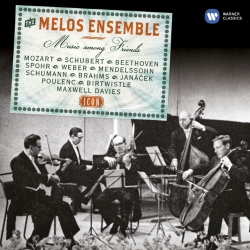
Period:ClassicalContemporaryModernGenre:ChamberConcertoWilliam Waterhouse was a renowned classical music artist who made significant contributions to the world of music as a bassoonist, teacher, and author. He was born on March 29, 1931, in London, England, to a family of musicians. His father, Aubrey Waterhouse, was a well-known oboist, and his mother, Helen Waterhouse, was a pianist. William grew up in a musical environment and started playing the bassoon at the age of 14. William Waterhouse's musical education began at the Royal Academy of Music in London, where he studied under Archie Camden, a prominent bassoonist of the time. He later continued his studies at the Paris Conservatoire, where he was taught by Fernand Oubradous, a renowned French bassoonist. Waterhouse's time in Paris was a turning point in his career, as he was exposed to a different style of playing and gained a deeper understanding of the instrument. After completing his studies, Waterhouse joined the London Symphony Orchestra as a bassoonist in 1955. He played with the orchestra for six years before joining the Philharmonia Orchestra in 1961. During his time with the Philharmonia, Waterhouse played under the baton of some of the most famous conductors of the time, including Herbert von Karajan, Otto Klemperer, and Carlo Maria Giulini. In addition to his work as an orchestral musician, Waterhouse was also a prolific chamber musician. He was a founding member of the Melos Ensemble, a group of musicians who specialized in chamber music. The ensemble was formed in 1950 and quickly gained a reputation for their innovative programming and virtuosic performances. Waterhouse played with the Melos Ensemble for over 20 years, and the group recorded numerous albums that are still highly regarded today. Waterhouse was also a respected teacher and taught at several institutions throughout his career. He was a professor of bassoon at the Royal Academy of Music from 1964 to 1996 and also taught at the Guildhall School of Music and Drama. Many of his students went on to have successful careers as bassoonists, and Waterhouse was known for his patient and supportive teaching style. In addition to his work as a performer and teacher, Waterhouse was also an author. He wrote several books on the bassoon, including "Bassoon" and "The Bassoon King," which are still considered essential reading for bassoonists today. Waterhouse's writing was known for its clarity and accessibility, and he was passionate about sharing his knowledge of the instrument with others. Throughout his career, Waterhouse received numerous awards and accolades for his contributions to the world of music. In 1978, he was awarded the Order of the British Empire for his services to music, and in 1993, he was awarded the International Double Reed Society's highest honor, the Honorary Membership Award. Waterhouse was also a Fellow of the Royal Academy of Music and a Fellow of the Royal Society of Arts. One of the highlights of Waterhouse's career was his performance of Mozart's Bassoon Concerto with the Philharmonia Orchestra in 1964. The performance was widely praised for its elegance and virtuosity, and it cemented Waterhouse's reputation as one of the finest bassoonists of his generation. Another notable performance was his recording of the Mozart Bassoon Concerto with the Academy of St. Martin in the Fields, which is still considered one of the definitive recordings of the piece.More....

Copyright Ⓒ 2013 Davinci Finger. All rights reseved
Service Terms & Policy