


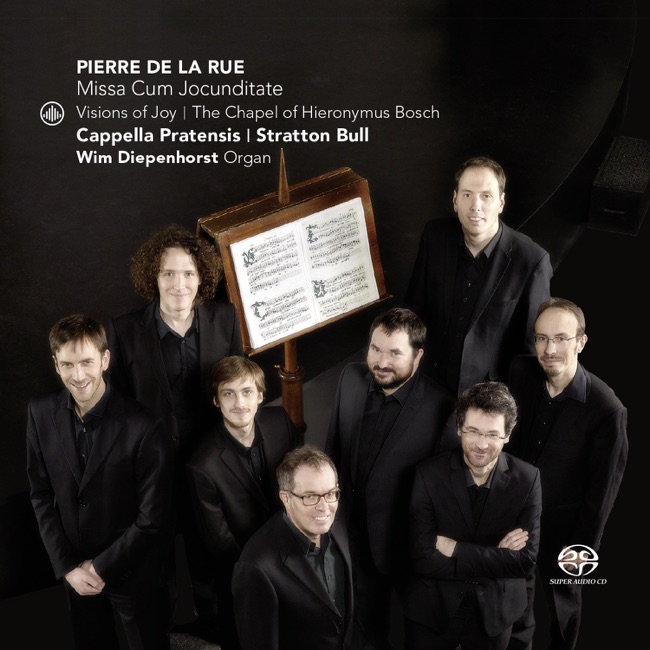
Wim Diepenhorst
Released Album
Choral
Artist Info
Role:ComposerWim Diepenhorst was a Dutch composer of classical music, born on December 28, 1920, in Rotterdam, Netherlands. He was the son of a music teacher and grew up in a musical family. His father, Jan Diepenhorst, was a composer and conductor, and his mother, Johanna, was a pianist. Wim's parents recognized his musical talent at an early age and encouraged him to pursue a career in music. Diepenhorst began his musical education at the Rotterdam Conservatory, where he studied composition with Willem Pijper and conducting with Eduard Flipse. He also studied piano with Luctor Ponse and organ with Adriaan Engels. After completing his studies, he worked as a music teacher and conductor in various Dutch cities. In 1950, Diepenhorst was appointed as the conductor of the Rotterdam Philharmonic Orchestra, a position he held until 1959. During his tenure, he conducted many premieres of contemporary Dutch composers, including Henk Badings, Rudolf Escher, and Ton de Leeuw. He also conducted the Dutch premiere of Igor Stravinsky's opera, The Rake's Progress. As a composer, Diepenhorst was influenced by the neoclassical style of Stravinsky and the serialism of Arnold Schoenberg. His early works, such as the Symphony No. 1 (1947) and the Concerto for Piano and Orchestra (1950), reflect these influences. However, he later developed his own style, characterized by a lyrical and expressive use of melody and harmony. One of Diepenhorst's most significant works is the oratorio, The Book of Job (1958). The piece is based on the biblical story of Job and features a large orchestra, choir, and soloists. The work is notable for its use of serial techniques and its dramatic and emotional portrayal of the story. Another notable work is the Symphony No. 2 (1962), which was commissioned by the Dutch government to celebrate the 150th anniversary of the Kingdom of the Netherlands. The piece is a tribute to Dutch history and culture and features themes from Dutch folk songs and hymns. Diepenhorst also composed several chamber works, including the String Quartet No. 1 (1952) and the Sonata for Violin and Piano (1954). These works showcase his lyrical and expressive style and demonstrate his skill in writing for smaller ensembles. In addition to his work as a composer and conductor, Diepenhorst was also a music educator. He taught composition at the Rotterdam Conservatory and the Royal Conservatory in The Hague. He also served as the director of the Rotterdam Conservatory from 1969 to 1981. Diepenhorst received many honors and awards for his contributions to Dutch music. In 1961, he was awarded the Order of Orange-Nassau, a prestigious Dutch honor. He was also a member of the Royal Netherlands Academy of Arts and Sciences and the Royal Society of Music in London. Wim Diepenhorst passed away on December 28, 1998, in Rotterdam, Netherlands. His legacy as a composer, conductor, and educator continues to inspire and influence musicians in the Netherlands and beyond.More....
Copyright Ⓒ 2013 Davinci Finger. All rights reseved
Service Terms & Policy