


Grete Stuckgold
Artist Info
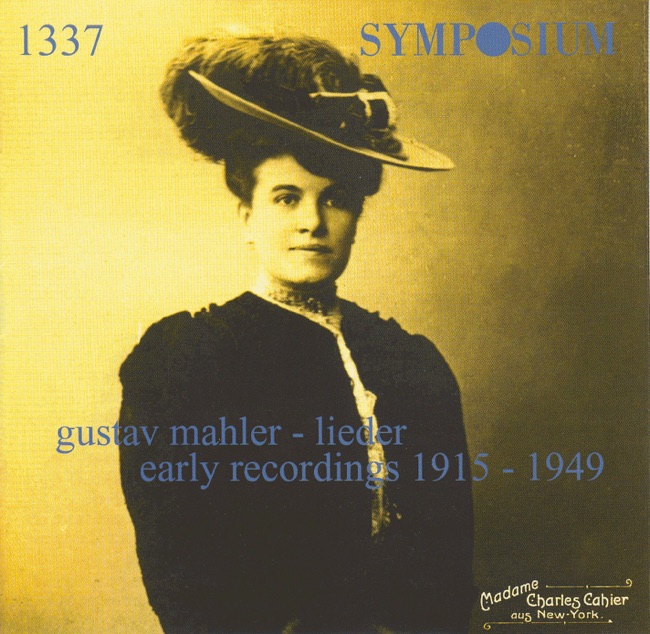
Period:RomanticGenre:VocalGrete Stuckgold was a renowned classical music artist who was born on May 12, 1904, in Berlin, Germany. She was the daughter of a Jewish family and grew up in a musical household. Her father was a violinist, and her mother was a pianist. From a young age, Grete showed a keen interest in music and began taking piano lessons at the age of six. Grete's talent for music was evident from an early age, and she quickly became a prodigy. She made her public debut at the age of nine, performing a Mozart piano concerto with the Berlin Philharmonic Orchestra. Her performance was met with critical acclaim, and she was hailed as a child prodigy. As Grete grew older, she continued to hone her skills as a pianist. She studied under some of the most renowned piano teachers of the time, including Artur Schnabel and Edwin Fischer. Her dedication to her craft paid off, and she soon became one of the most sought-after pianists in Europe. In 1928, Grete made her debut in the United States, performing with the New York Philharmonic Orchestra. Her performance was a huge success, and she quickly became a favorite among American audiences. She went on to perform with many of the leading orchestras in the United States, including the Boston Symphony Orchestra, the Chicago Symphony Orchestra, and the Philadelphia Orchestra. Throughout her career, Grete was known for her technical brilliance and her ability to bring out the emotional depth of the music she played. She was particularly renowned for her interpretations of the works of Beethoven, Mozart, and Schubert. Her performances were marked by a sense of passion and intensity that captivated audiences around the world. In addition to her performances as a soloist, Grete was also a dedicated chamber musician. She frequently performed with other renowned musicians, including the violinist Jascha Heifetz and the cellist Emanuel Feuermann. Together, they formed one of the most celebrated chamber music trios of the time. Despite her success as a musician, Grete's life was not without its challenges. As a Jewish artist living in Nazi Germany, she faced increasing persecution and discrimination. In 1933, she was forced to flee Germany and emigrate to the United States. She continued to perform and teach in the United States, but she never forgot the country of her birth. Throughout her career, Grete received numerous awards and honors for her contributions to classical music. In 1958, she was awarded the Order of Merit of the Federal Republic of Germany, one of the country's highest honors. She was also awarded the Brahms Prize in 1961 and the Beethoven Medal in 1970. Grete continued to perform and teach until her death in 1977. She left behind a legacy as one of the greatest pianists of the 20th century, and her contributions to classical music continue to be celebrated to this day.More....
Recent Artist Music
Copyright Ⓒ 2013 Davinci Finger. All rights reseved
Service Terms & Policy