


Charles Byrd
Released Album
Chamber
-
 March 29, 2005
 -
-
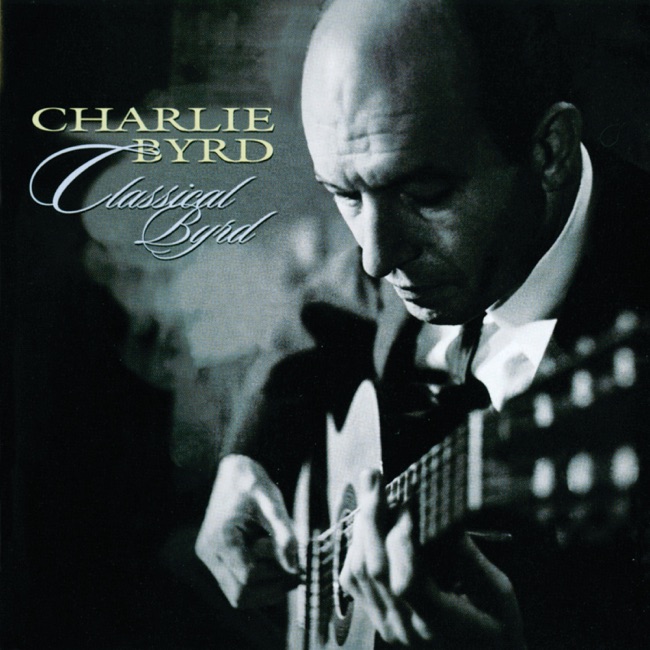 February 4, 1997
 -

Artist Info
Role:ComposerPeriod:RenaissanceBaroqueModernGenre:ChamberOrchestralCharles Byrd was an American composer and pianist who was born on August 15, 1925, in Suffolk, Virginia. He was the youngest of six children and grew up in a musical family. His father was a Baptist minister who played the guitar and sang, and his mother was a pianist who taught music. Byrd began playing the piano at the age of six and showed a natural talent for music. Byrd's family moved to Washington, D.C., when he was a teenager, and he continued his musical education at Dunbar High School, a prestigious school for African American students. He studied piano with Henry Grant, a well-known teacher, and composer, and also played in the school's orchestra. After graduating from high school, Byrd attended Howard University, where he studied music theory and composition. During World War II, Byrd served in the U.S. Army and played in the Army band. After the war, he returned to Howard University and completed his degree in music. He then went on to study at the Manhattan School of Music in New York City, where he earned a master's degree in music composition. Byrd's early compositions were influenced by jazz and blues music, which he had grown up listening to. He was also influenced by the music of classical composers such as Bach, Beethoven, and Mozart. Byrd's music was characterized by its rhythmic complexity, harmonic sophistication, and melodic beauty. One of Byrd's most famous works is his Piano Sonata No. 1, which he composed in 1952. The sonata is a three-movement work that showcases Byrd's virtuosic piano playing and his skill as a composer. The first movement is a lively and energetic piece that features complex rhythms and harmonies. The second movement is a slow and lyrical piece that showcases Byrd's ability to write beautiful melodies. The third movement is a fast and exciting piece that brings the sonata to a thrilling conclusion. Byrd's other notable works include his String Quartet No. 1, which he composed in 1955. The quartet is a four-movement work that features intricate counterpoint and rich harmonies. Byrd's Symphony No. 1, which he composed in 1960, is another notable work. The symphony is a three-movement work that showcases Byrd's skill as an orchestrator and his ability to write powerful and dramatic music. In addition to his work as a composer, Byrd was also a talented pianist. He performed extensively throughout the United States and Europe, and was known for his virtuosic playing and his ability to interpret a wide range of musical styles. Byrd was also a dedicated teacher and mentor to many young musicians. He taught at several universities, including Howard University, the University of Massachusetts, and the University of Maryland. He was known for his kindness, generosity, and his ability to inspire his students to achieve their full potential. Byrd's music has been performed by many orchestras and chamber ensembles around the world. His legacy as a composer and pianist continues to inspire and influence musicians today.More....
Recent Artist Music

Copyright Ⓒ 2013 Davinci Finger. All rights reseved
Service Terms & Policy