


Tadashi Yanada
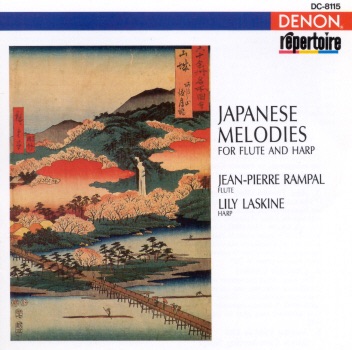
Artist Info
Role:ComposerGenre:VocalTadashi Yanada was a Japanese composer of classical music who was born on December 25, 1923, in Tokyo, Japan. He was the youngest of three children and grew up in a family that was deeply interested in music. His father was a music teacher, and his mother was a pianist. Yanada's parents recognized his musical talent at an early age and encouraged him to pursue a career in music. Yanada began his musical education at the age of six when he started taking piano lessons. He showed great promise as a pianist and composer, and by the time he was a teenager, he had already composed several pieces of music. In 1941, Yanada enrolled at the Tokyo National University of Fine Arts and Music, where he studied composition under the tutelage of Tomojiro Ikenouchi. During World War II, Yanada was drafted into the Japanese army and served as a medic. After the war, he returned to the Tokyo National University of Fine Arts and Music to complete his studies. In 1949, he graduated with a degree in composition and began his career as a composer. Yanada's early works were heavily influenced by Western classical music, particularly the works of Beethoven, Brahms, and Wagner. However, he also incorporated elements of traditional Japanese music into his compositions, creating a unique blend of East and West. One of Yanada's most famous works is his Symphony No. 1, which he composed in 1953. The symphony is a powerful and emotional work that reflects Yanada's experiences during World War II. It is divided into four movements, each of which represents a different aspect of the war. The first movement, "The March to War," is a powerful and ominous piece that reflects the anticipation and fear of going to war. The second movement, "The Battle," is a chaotic and dissonant piece that represents the violence and destruction of war. The third movement, "The Aftermath," is a mournful and reflective piece that represents the aftermath of war. The final movement, "The Rebuilding," is a hopeful and optimistic piece that represents the rebuilding and renewal of society after the war. Yanada's Symphony No. 1 was well-received by critics and audiences alike and established him as one of Japan's leading composers. He went on to compose several other symphonies, including Symphony No. 2, which he composed in 1958, and Symphony No. 3, which he composed in 1963. In addition to his symphonies, Yanada also composed several operas, including "The Tale of Genji," which he composed in 1965. The opera is based on the classic Japanese novel of the same name and tells the story of a nobleman's romantic adventures. The opera is notable for its use of traditional Japanese instruments, such as the koto and shakuhachi, and its incorporation of Japanese musical styles. Yanada's other notable works include his Piano Concerto, which he composed in 1956, and his String Quartet No. 1, which he composed in 1960. Both works showcase Yanada's skill as a composer and his ability to blend Western and Japanese musical styles. Throughout his career, Yanada received numerous awards and honors for his contributions to classical music. In 1973, he was awarded the Order of the Sacred Treasure, a prestigious award given by the Japanese government to individuals who have made significant contributions to Japanese culture. He was also awarded the Suntory Music Award in 1981 and the Japan Art Academy Prize in 1991.More....
Recent Artist Music
Copyright Ⓒ 2013 Davinci Finger. All rights reseved
Service Terms & Policy