


Henry Swoboda
Released Album
Concerto
-
 September 29, 2017
 -
 December 4, 2010
 -
 February 23, 2010
 -
-
 February 9, 2009
 -
Keyboard
-
 November 13, 2020
Artist Info
Role:Conductor PerformerPeriod:ClassicalGenre:ConcertoHenry Swoboda was a renowned conductor and composer of classical music, born on August 16, 1899, in Vienna, Austria. He was the son of a music teacher and grew up in a family that was deeply involved in music. Swoboda showed an early interest in music and began playing the piano at the age of four. He later learned to play the violin and the cello. Swoboda studied music at the Vienna Conservatory, where he was trained in conducting, composition, and music theory. He also studied with some of the most prominent musicians of his time, including Arnold Schoenberg, Alban Berg, and Anton Webern. Swoboda was deeply influenced by the Second Viennese School, a group of composers who were known for their atonal and serialist music. In 1922, Swoboda made his debut as a conductor with the Vienna Symphony Orchestra. He quickly gained a reputation as a talented conductor and was soon invited to conduct other orchestras in Europe. In 1925, he was appointed the conductor of the Berlin State Opera, where he remained for three years. In 1928, Swoboda moved to the United States, where he became the conductor of the San Francisco Symphony Orchestra. He remained with the orchestra for two years before moving to New York City, where he became the conductor of the New York Philharmonic. Swoboda remained with the New York Philharmonic for six years, during which time he conducted some of the most memorable performances in the orchestra's history. One of Swoboda's most notable performances with the New York Philharmonic was his interpretation of Gustav Mahler's Symphony No. 8, which was performed in 1930. The performance was widely praised by critics and is still considered one of the greatest performances of the work. Swoboda also conducted the world premiere of Aaron Copland's "El Salón México" in 1937. In addition to his work with the New York Philharmonic, Swoboda was also a prolific composer. He wrote several operas, including "The Emperor's New Clothes" and "The Magic Flute," as well as numerous orchestral works. Swoboda's music was heavily influenced by the Second Viennese School, and his compositions were known for their atonal and serialist elements. Swoboda's career was interrupted by World War II, during which he served in the United States Army. After the war, he returned to Europe, where he conducted several orchestras, including the Vienna Philharmonic and the Berlin Philharmonic. He also continued to compose music, and his works were performed by orchestras around the world. In 1950, Swoboda returned to the United States, where he became the conductor of the Cincinnati Symphony Orchestra. He remained with the orchestra for four years before retiring from conducting. Swoboda continued to compose music until his death in 1975. Throughout his career, Swoboda received numerous awards and honors for his contributions to classical music. He was awarded the Austrian Cross of Honor for Science and Art in 1955 and was made an honorary citizen of Vienna in 1969. In 1970, he was awarded the Grand Decoration of Honor for Services to the Republic of Austria. Henry Swoboda was a pioneering conductor and composer who helped to shape the course of classical music in the 20th century. His innovative approach to music and his commitment to pushing the boundaries of traditional classical music made him one of the most important figures in the history of the genre.More....
Recent Artist Music
1
9:45
2
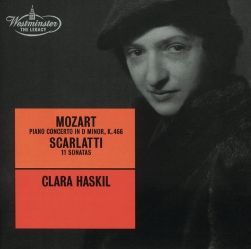
14:12
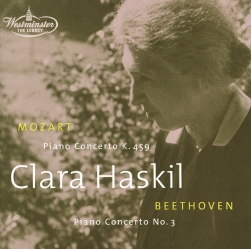
4
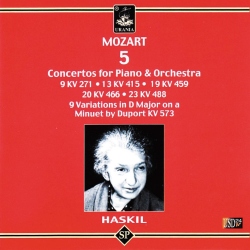
12:18
5
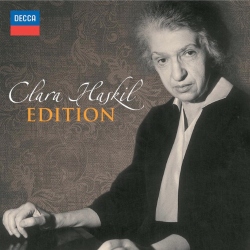
14:11
10
12:17
11
12:14
12
9:39

Copyright Ⓒ 2013 Davinci Finger. All rights reseved
Service Terms & Policy