


Johann Wolfgang von Goethe
Released Album
Vocal
-
 September 16, 2022
 -
-
 January 15, 2021
 -
 January 1, 2015
 -
Artist Info
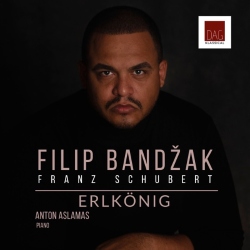
Role:Composer PerformerCountry: GermanyBirth:August 28, 1749 in Frankfurt am Main, GermanyDeath:March 22, 1832 in Weimar, GermanyPeriod:RomanticGenre:VocalJohann Wolfgang von Goethe was a German writer, poet, and polymath who lived from 1749 to 1832. While he is primarily known for his literary works, he was also a passionate lover of music and a skilled musician in his own right. Goethe was born in Frankfurt, Germany, in 1749. His father was a wealthy lawyer and his mother was the daughter of a prominent Frankfurt official. From a young age, Goethe showed a talent for music, and he began taking piano lessons at the age of eight. He also learned to play the violin and the harpsichord, and he was a skilled singer. As a teenager, Goethe became interested in opera and began attending performances at the Frankfurt Opera House. He was particularly drawn to the works of Christoph Willibald Gluck, a German composer who was known for his innovative approach to opera. Goethe was also a fan of the Italian composer Giovanni Battista Pergolesi, whose music he described as "full of grace and charm." In 1765, Goethe enrolled at the University of Leipzig to study law. While he was there, he continued to pursue his love of music, attending concerts and performing in student musical groups. He also began writing poetry and plays, and his first published work, a collection of poems called "Annette," was released in 1767. After completing his studies in Leipzig, Goethe returned to Frankfurt and began practicing law. However, he soon realized that his true passion lay in literature and the arts, and he began devoting more and more of his time to writing and music. In 1775, Goethe published his first major work, "The Sorrows of Young Werther," a novel that became an instant sensation and made him a literary celebrity. The book was praised for its emotional intensity and its exploration of themes like love, death, and the meaning of life. Despite his success as a writer, Goethe continued to pursue his love of music. He composed several songs and instrumental pieces, and he even wrote the libretto for an opera called "Erwin und Elmire," which was set to music by the composer Johann André. In 1786, Goethe was appointed to the court of the Duke of Saxe-Weimar, where he served as a minister and advisor. He remained in this position for the rest of his life, and during his time at the court, he became a patron of the arts and a champion of German culture. One of Goethe's most significant contributions to music was his collaboration with the composer Johann Nepomuk Hummel. In 1791, Hummel was appointed as the court pianist in Weimar, and he quickly became a favorite of Goethe's. The two men began working together on a series of musical projects, including a set of songs based on Goethe's poetry and a piano concerto that Hummel dedicated to Goethe. Goethe also had a close relationship with the composer Franz Schubert, who set many of his poems to music. Schubert was a great admirer of Goethe's work, and he composed some of his most famous songs based on Goethe's poetry, including "Gretchen am Spinnrade" and "Erlkönig." In addition to his collaborations with composers, Goethe was also a passionate advocate for music education. He believed that music was an essential part of a well-rounded education, and he worked to establish music schools and conservatories throughout Germany. Goethe's contributions to music were recognized with several awards and honors during his lifetime. In 1815, he was awarded the Grand Cross of the Order of the Red Eagle, one of the highest honors in Prussia.More....
Recent Artist Music
1
Elective Affinities
Excerpt from Book 2 Chapter 16 (introduced by an excerpt of Schubert's Die Post)
56
5
2:2
8
4:23
Copyright Ⓒ 2013 Davinci Finger. All rights reseved
Service Terms & Policy