


Georges I. Gurdjieff/Thomas de Hartmann
Released Album
Keyboard
-
 January 6, 2023
 -
 April 22, 2022
 -
 June 7, 2019
 -
 February 12, 2016
 -
 October 30, 2012
 -
 May 14, 2002
Artist Info
Role:ComposerPeriod:ModernGenre:KeyboardGeorges Ivanovich Gurdjieff was a composer, philosopher, and spiritual teacher who was born in Alexandropol, Armenia, in 1866. He was the son of a Greek father and an Armenian mother, and he grew up in a multicultural environment that exposed him to a variety of languages, religions, and traditions. Gurdjieff was a self-taught musician who played several instruments, including the piano, the harmonium, and the duduk, a traditional Armenian wind instrument. Gurdjieff's musical career began in the early 1900s when he started performing in cafes and restaurants in Russia and Turkey. He was known for his improvisational skills and his ability to blend different musical styles and traditions. In 1912, Gurdjieff met Thomas de Hartmann, a Russian composer and pianist who would become his collaborator and close friend. Together, they embarked on a musical journey that would result in some of the most innovative and influential works of the 20th century. Gurdjieff and de Hartmann's collaboration was based on the idea of creating music that would serve as a vehicle for spiritual transformation. They believed that music had the power to awaken the innermost parts of the human soul and to connect people with their higher selves. Their compositions were inspired by a variety of sources, including Armenian folk music, Russian Orthodox chants, Sufi melodies, and ancient Greek and Egyptian music. One of the highlights of Gurdjieff and de Hartmann's collaboration was the creation of the "Sacred Hymns," a collection of 48 pieces that were composed between 1916 and 1923. The "Sacred Hymns" were based on ancient Armenian and Greek melodies that Gurdjieff had collected during his travels in the Middle East and Central Asia. The pieces were arranged for piano and voice, and they were intended to be performed in a meditative and contemplative manner. Another important work by Gurdjieff and de Hartmann was the "Asian Suite," a collection of 10 pieces that were composed between 1927 and 1929. The "Asian Suite" was inspired by Gurdjieff's travels in India, Tibet, and Central Asia, and it featured a blend of Indian, Tibetan, and Central Asian melodies and rhythms. The pieces were arranged for piano, flute, and percussion, and they were intended to be performed as a suite. Gurdjieff and de Hartmann's music was not widely known during their lifetime, and it was only after Gurdjieff's death in 1949 that their compositions began to gain recognition. In the 1960s, a group of musicians and scholars led by the pianist Keith Jarrett began to study and perform Gurdjieff and de Hartmann's music. Their recordings of the "Sacred Hymns" and the "Asian Suite" became popular among spiritual seekers and music enthusiasts, and they helped to establish Gurdjieff and de Hartmann as important figures in the world of music and spirituality. Today, Gurdjieff and de Hartmann's music continues to inspire and fascinate people around the world. Their compositions are seen as a unique and powerful expression of the human spirit, and they are valued for their ability to connect people with their innermost selves and with the divine. Gurdjieff and de Hartmann's legacy is a testament to the power of music to transcend cultural and religious boundaries and to touch the deepest parts of the human soul.More....
Recent Artist Music
1
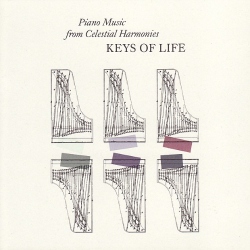
4:17
2
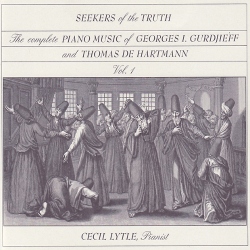
3:2
3
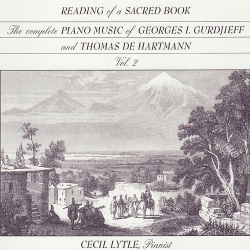
1:42
4
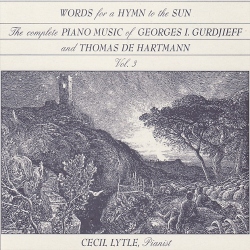
1:53

7
2:1
8
2:23
9
3:37
10
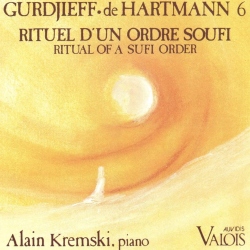
4:47
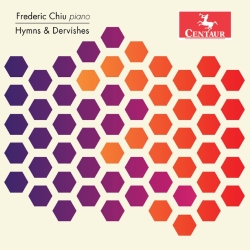
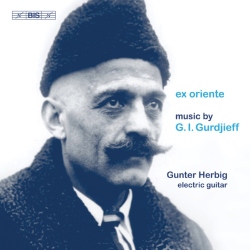
13

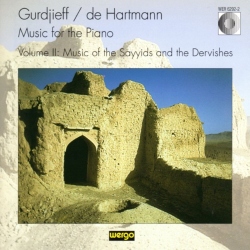
Music of the Sayyids and the Dervishes in 3 series
First Series. Sayyid Chant and Dance, in G minor
4:14


Recommend Playlist




Copyright Ⓒ 2013 Davinci Finger. All rights reseved
Service Terms & Policy