


Hermann Abel
Released Album
Orchestral
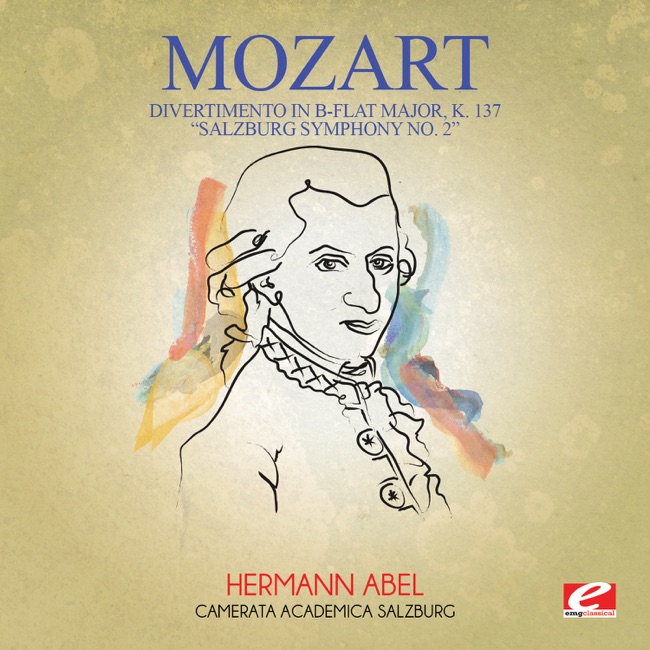
Artist Info
Role:ConductorHermann Abel was a German conductor and composer who lived from 1839 to 1910. He was born in Cologne, Germany, on August 5, 1839, to a family of musicians. His father, Carl Friedrich Abel, was a cellist and conductor, and his mother, Maria Anna Abel, was a pianist and singer. Hermann Abel showed an early interest in music and began studying the piano and violin at a young age. Abel's musical education began at the Cologne Conservatory, where he studied under Ferdinand Hiller. He later studied in Berlin with Hans von Bülow and in Leipzig with Felix Mendelssohn. In 1861, Abel made his debut as a conductor in Cologne, leading a performance of Beethoven's Symphony No. 5. He quickly gained a reputation as a talented conductor and was appointed as the conductor of the Cologne Opera in 1863. Abel's career as a conductor took him to many of the major cities of Europe, including Berlin, Vienna, and Paris. He was known for his interpretations of the works of Beethoven, Brahms, and Wagner, and was particularly admired for his ability to bring out the emotional depth of these composers' music. In 1871, Abel was appointed as the conductor of the Royal Opera in Berlin, a position he held for 14 years. One of Abel's most notable performances took place in 1876, when he conducted the premiere of Richard Wagner's opera Siegfried at the Bayreuth Festival. This was a significant moment in the history of classical music, as it marked the first performance of the complete Ring Cycle. Abel's interpretation of the opera was widely praised, and he went on to conduct many more performances of Wagner's works throughout his career. In addition to his work as a conductor, Abel was also a prolific composer. He wrote a number of orchestral works, including symphonies, overtures, and suites, as well as chamber music and songs. His music was influenced by the Romantic composers of his time, particularly Brahms and Wagner, and was known for its emotional intensity and rich harmonies. Abel's contributions to classical music were recognized with a number of awards and honors. In 1888, he was awarded the Order of the Red Eagle by the King of Prussia, and in 1895 he was appointed as a member of the Royal Academy of Arts in Berlin. He was also awarded the title of Professor by the Prussian government in 1900. Abel continued to conduct and compose music until his death in Berlin on May 1, 1910. He left behind a legacy as one of the most talented and influential conductors of his time, and his music continues to be performed and admired by classical music enthusiasts around the world.More....
Recent Artist Music
1
4:5
2

5:52
Copyright Ⓒ 2013 Davinci Finger. All rights reseved
Service Terms & Policy