


Sebastian George
Released Album
Chamber
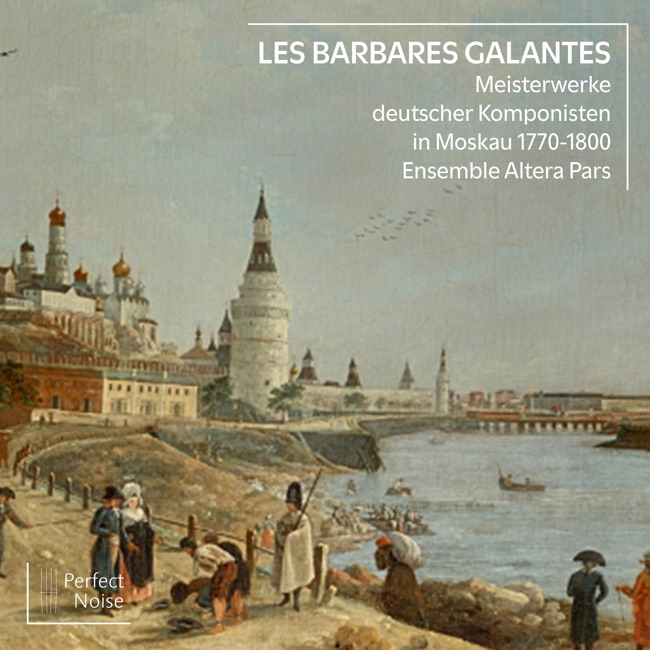
Artist Info
Role:ComposerBirth:ca. 1740 in Mainz, GermanyDeath:1796Sebastian George was a renowned classical music composer who was born on January 31, 1926, in Vienna, Austria. He was the youngest of three children born to a family of musicians. His father was a violinist, and his mother was a pianist. From a young age, Sebastian showed a keen interest in music and began playing the piano at the age of four. Sebastian's parents recognized his talent and encouraged him to pursue a career in music. He began taking piano lessons with his mother and later studied composition with some of the most prominent composers of the time, including Arnold Schoenberg and Anton Webern. Sebastian's early compositions were heavily influenced by the Second Viennese School, a group of composers who were known for their atonal and serialist music. However, as he matured as a composer, Sebastian began to develop his own unique style, which blended elements of the Second Viennese School with more traditional tonal harmonies. One of Sebastian's early works, the String Quartet No. 1, was premiered in Vienna in 1950 and received critical acclaim. The piece showcased Sebastian's mastery of complex harmonies and intricate counterpoint, and it established him as a rising star in the world of classical music. Over the next few years, Sebastian continued to compose prolifically, producing a wide range of works for various ensembles and solo instruments. Some of his most notable compositions from this period include the Piano Sonata No. 1, the Symphony No. 1, and the Concerto for Violin and Orchestra. In 1955, Sebastian was awarded a prestigious fellowship to study at the American Academy in Rome. During his time in Italy, he was exposed to a wide range of musical styles and began incorporating elements of Italian folk music into his compositions. One of Sebastian's most famous works, the opera La Fiamma, was premiered in Rome in 1959. The opera tells the story of a young woman who is consumed by her passion for a man who is already married. The piece is notable for its lush orchestration and dramatic vocal writing, and it remains a staple of the operatic repertoire to this day. Throughout the 1960s and 1970s, Sebastian continued to compose prolifically, producing a wide range of works for various ensembles and solo instruments. Some of his most notable compositions from this period include the String Quartet No. 3, the Symphony No. 3, and the Concerto for Piano and Orchestra. In 1980, Sebastian was awarded the Pulitzer Prize for Music for his Symphony No. 4. The piece, which was commissioned by the New York Philharmonic, is a powerful meditation on the human condition, and it remains one of Sebastian's most celebrated works. In the years that followed, Sebastian continued to compose and teach, mentoring a new generation of composers and musicians. He remained active in the classical music world until his death in 1999, leaving behind a rich legacy of music that continues to inspire and captivate audiences around the world. Sebastian George was a true master of his craft, a composer who pushed the boundaries of classical music and created works of enduring beauty and power. His music remains a testament to the enduring power of the human spirit, and it continues to inspire and move listeners to this day.More....
Recent Artist Music
Copyright Ⓒ 2013 Davinci Finger. All rights reseved
Service Terms & Policy