


Henri Rabaud
Released Album
Chamber
-
 January 12, 2024
 -
 September 30, 2022
 -
 September 16, 2022
 -
 May 7, 2021
 -
 June 25, 2019
 -
 September 8, 2017
Opera
-
 January 1, 2017
 -
 October 14, 2008
 -
 June 13, 2006
 -
 April 30, 1996
Orchestral
-
 October 20, 2023
 -
 January 29, 2010
 -
Artist Info
Role:Composer ConductorBirth:1873Death:1949Genre:OperaOrchestralHenri Rabaud was a French composer, conductor, and music educator who lived from 10 November 1873 to 11 September 1949. He was born in Paris, France, to a family of musicians. His father, Charles Rabaud, was a conductor and composer, and his mother, Marie Delaunay, was a pianist. Henri Rabaud showed an early interest in music and began studying the piano and violin at a young age. Rabaud's musical education began at the Paris Conservatory, where he studied under Jules Massenet, Théodore Dubois, and Gabriel Fauré. He won the Prix de Rome in 1894 for his cantata Daphné, which earned him a scholarship to study in Rome. While in Rome, Rabaud continued to compose and study music, and he also became interested in conducting. After returning to Paris, Rabaud began his career as a conductor, leading orchestras in France and abroad. He was appointed conductor of the Paris Opéra in 1914, a position he held until 1918. During this time, he conducted many premieres of new works, including Debussy's Jeux and Ravel's Daphnis et Chloé. Rabaud's compositions are characterized by their lush harmonies, colorful orchestration, and melodic lyricism. He wrote in a variety of genres, including opera, ballet, symphonic music, and chamber music. Some of his most famous works include the opera Mârouf, savetier du Caire, the ballet La Fille de Roland, and the orchestral suite La Procession nocturne. Mârouf, savetier du Caire, which premiered in 1914, is a comic opera set in Cairo. The opera tells the story of Mârouf, a shoemaker who becomes a wealthy merchant through a series of lucky events. The music is characterized by its exoticism, with influences from Middle Eastern and North African music. The opera was a great success and was performed frequently in France and abroad. La Fille de Roland, which premiered in 1904, is a ballet based on the medieval French epic poem The Song of Roland. The ballet tells the story of Roland, a knight who fights against the Saracens in Spain. The music is characterized by its dramatic intensity and colorful orchestration. The ballet was a great success and was performed frequently in France and abroad. La Procession nocturne, which premiered in 1908, is an orchestral suite based on a poem by Paul Verlaine. The music is characterized by its lush harmonies and colorful orchestration, and it evokes the atmosphere of a nocturnal procession. The suite was a great success and was performed frequently in France and abroad. In addition to his work as a composer and conductor, Rabaud was also a music educator. He taught at the Paris Conservatory from 1908 to 1929, where his students included Maurice Duruflé, Olivier Messiaen, and Henri Sauguet. He also wrote several books on music, including a treatise on orchestration and a biography of his father, Charles Rabaud. Henri Rabaud died in Paris on 11 September 1949. He left behind a legacy of music that is characterized by its lush harmonies, colorful orchestration, and melodic lyricism. His works continue to be performed and recorded today, and he is remembered as one of the most important French composers of the early 20th century.More....
Recent Artist Music

5
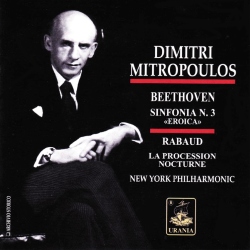
13:53
13
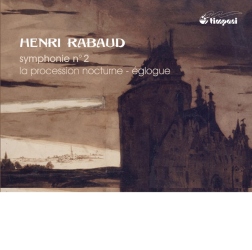
Procession Nocturne, symphonic poem after Lenau's "Faust," Op. 6
La procession nocturne, Op. 6
14:5
Copyright Ⓒ 2013 Davinci Finger. All rights reseved
Service Terms & Policy