


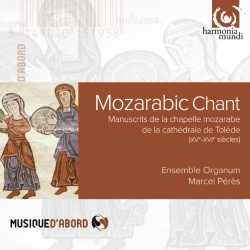
Mozarabic Chant

Artist Info
Role:ComposerGenre:ChoralMozarabic Chant was a composer of sacred music who lived during the 8th and 9th centuries in the Iberian Peninsula. Little is known about his life, but his music has had a lasting impact on the development of Western music. Mozarabic Chant was born in the region of Toledo, which was then part of the Muslim-ruled Al-Andalus. He was likely raised in a Christian family and would have been exposed to both Christian and Islamic music traditions. This cultural mix would have influenced his own compositions, which blended elements of both traditions. As a young man, Mozarabic Chant likely received musical training in the local churches and monasteries. He would have learned to sing and play various instruments, including the lyre, lute, and harp. He may have also studied the works of earlier composers, such as St. Ambrose and St. Gregory the Great. Mozarabic Chant's music was primarily composed for use in the Christian liturgy. He wrote hymns, psalms, and other sacred songs that were sung during Mass and other religious services. His music was characterized by its simple melodies and use of repetition, which made it easy for congregations to sing along. One of Mozarabic Chant's most famous works is the hymn "Veni Creator Spiritus," which is still sung in churches today. This hymn is a prayer to the Holy Spirit, asking for guidance and inspiration. The melody is simple and repetitive, with a haunting quality that has made it a favorite of many composers over the centuries. Another notable work by Mozarabic Chant is the "Liber Hymnorum," a collection of hymns and chants that was used in the Mozarabic rite of the Catholic Church. This collection includes many of Mozarabic Chant's own compositions, as well as works by other composers of the time. Mozarabic Chant's music was not widely known outside of the Iberian Peninsula during his lifetime, but it had a significant impact on the development of Western music. His use of simple melodies and repetition influenced the development of Gregorian chant, which became the standard form of liturgical music in the Catholic Church. In addition to his contributions to sacred music, Mozarabic Chant was also known for his poetry. He wrote many hymns and other religious poems, which were often set to music by himself and other composers. His poetry was characterized by its simplicity and directness, and it often expressed a deep sense of devotion and piety. Mozarabic Chant's legacy has continued to influence music to this day. His music has been performed and recorded by many choirs and ensembles, and his hymns and chants are still sung in churches around the world. His contributions to the development of Western music are a testament to the power of simple melodies and the enduring influence of religious devotion.More....
Copyright Ⓒ 2013 Davinci Finger. All rights reseved
Service Terms & Policy