


Giovanni Antonio Guido
Released Album
Concerto
-
 November 4, 2022
 -
 July 9, 2021
 -
 January 14, 2013
 -
Artist Info
Role:ComposerCountry: ItalyBirth:ca. 1675Death:after 1728Period:BaroqueGiovanni Antonio Guido was a prominent Italian composer and violinist of the Baroque era. He was born on December 27, 1675, in Faenza, a small town in the Emilia-Romagna region of Italy. Guido was born into a family of musicians, and his father, Francesco Guido, was a violinist and composer. Guido's early musical training was under his father's guidance, and he quickly showed a natural talent for the violin. Guido's musical education continued in Bologna, where he studied with the renowned composer and violinist Giuseppe Torelli. Torelli was a significant influence on Guido's musical style, and he taught him the principles of the Baroque concerto. Guido's studies with Torelli were crucial in shaping his musical career, and he became one of the most prominent composers of the Baroque era. Guido's career as a composer began in the early 1700s, and he quickly gained a reputation for his innovative and expressive compositions. His works were characterized by their virtuosity and technical complexity, and they were highly regarded by his contemporaries. Guido's compositions were influenced by the Italian Baroque style, and he was particularly interested in the concerto form. Guido's most significant contribution to music was his development of the solo concerto. He was one of the first composers to write concertos for a solo instrument accompanied by an orchestra. Guido's solo concertos were groundbreaking, and they paved the way for the development of the solo concerto as a musical form. Guido's most famous work is his Concerto for Violin and Strings in G minor, Op. 6, No. 8, also known as "La Stravaganza." The concerto is one of the most significant works of the Baroque era, and it is characterized by its virtuosic violin writing and its complex harmonic structure. The concerto is composed of three movements, and it is a showcase for the solo violinist's technical abilities. Guido's other notable works include his Concerto for Violin and Strings in D major, Op. 3, No. 9, and his Concerto for Violin and Strings in A minor, Op. 3, No. 6. Both of these concertos are excellent examples of Guido's innovative approach to the concerto form, and they demonstrate his mastery of the violin. Guido's music was highly regarded during his lifetime, and he was considered one of the most significant composers of the Baroque era. His music was performed throughout Europe, and he was particularly popular in England. Guido's influence on music was significant, and his innovative approach to the concerto form paved the way for future composers. Guido's career as a composer was cut short by his untimely death in 1728. He died in Piacenza, Italy, at the age of 52. Despite his short career, Guido's contributions to music were significant, and his legacy lives on through his compositions. In conclusion, Giovanni Antonio Guido was a prominent Italian composer and violinist of the Baroque era. He was born into a family of musicians and received his early musical training from his father. Guido's studies with Giuseppe Torelli were crucial in shaping his musical career, and he became one of the most significant composers of the Baroque era. Guido's most significant contribution to music was his development of the solo concerto, and his innovative approach to the concerto form paved the way for future composers. Guido's music was highly regarded during his lifetime, and his legacy lives on through his compositions.More....
Recent Artist Music
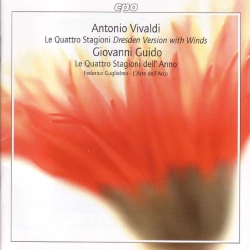
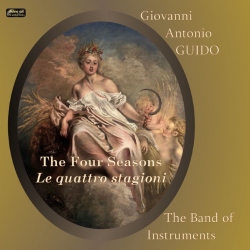
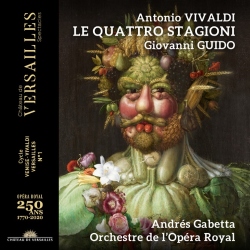
4
Scherzi Armonici sopra the 4 Staggioni dell'Anno, Op. 3
II. Prestissimo. Le cruel Aquilon nous declare la guerre
1:55
Copyright Ⓒ 2013 Davinci Finger. All rights reseved
Service Terms & Policy