


Alexander Munro
Artist Info
Role:ComposerGenre:ChamberAlexander Munro was a Scottish composer who lived from 1825 to 1871. He was born in the town of Inverness, in the Scottish Highlands, and showed an early interest in music. His father was a musician and taught him to play the violin and piano. Munro also showed a talent for composition from a young age, and began writing his own music as a teenager. Munro's early musical education was somewhat informal, as there were few opportunities for formal training in Inverness at the time. However, he was able to study with local musicians and attend concerts and performances whenever possible. In 1843, he moved to Edinburgh to pursue his musical studies more seriously. He enrolled in the Edinburgh Academy of Music, where he studied composition with the renowned Scottish composer William Sterndale Bennett. During his time in Edinburgh, Munro became involved in the city's vibrant musical scene. He played in local orchestras and chamber groups, and his compositions began to gain recognition. In 1847, he won a prize for his String Quartet No. 1 in A minor, which was performed at the Edinburgh Music Festival. This success encouraged Munro to continue pursuing a career in music. In 1850, Munro moved to London to further his career. He quickly became involved in the city's musical life, playing in orchestras and working as a music teacher. He also continued to compose, and his works began to be performed by leading musicians and ensembles. In 1853, his Symphony No. 1 in D major was premiered at the Crystal Palace, one of London's leading concert venues. The symphony was well-received, and helped establish Munro as a composer of note. Munro's music was characterized by its melodic lyricism and its use of Scottish folk melodies and rhythms. He was deeply influenced by the music of his homeland, and sought to incorporate its distinctive qualities into his compositions. His works often featured lush harmonies and rich orchestration, and were praised for their emotional depth and expressive power. One of Munro's most famous works is his Scottish Symphony, which he composed in 1855. The symphony is a tribute to Munro's Scottish heritage, and incorporates a number of traditional Scottish tunes and dances. The work is notable for its use of the bagpipes, which Munro included in the score to evoke the sound of the Scottish countryside. The Scottish Symphony was premiered in London in 1856, and was an immediate success. It remains one of Munro's most popular and enduring works. In addition to his orchestral works, Munro also composed a number of chamber music pieces. His String Quartet No. 2 in E minor, composed in 1860, is considered one of his finest works in this genre. The quartet is notable for its intricate counterpoint and its use of Scottish folk melodies. It was premiered in London in 1861, and was praised for its originality and beauty. Munro's career was cut short by his untimely death in 1871, at the age of 46. However, his music continued to be performed and admired in the years following his death. His works were championed by leading musicians of the day, including the conductor Sir Thomas Beecham, who conducted a number of Munro's works with the London Philharmonic Orchestra. Today, Munro is remembered as one of Scotland's most important composers of the 19th century. His music is admired for its beauty, its emotional depth, and its evocation of the Scottish landscape and culture.More....
Recent Artist Music
1
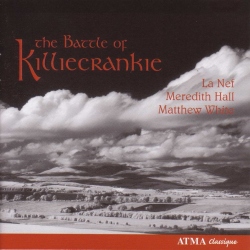
Sonata from camera "Bonny Jean of Aberdeen"
Allegro / Sarabanda (Grazioso) / Corrente (Vivace)
5:6
Copyright Ⓒ 2013 Davinci Finger. All rights reseved
Service Terms & Policy