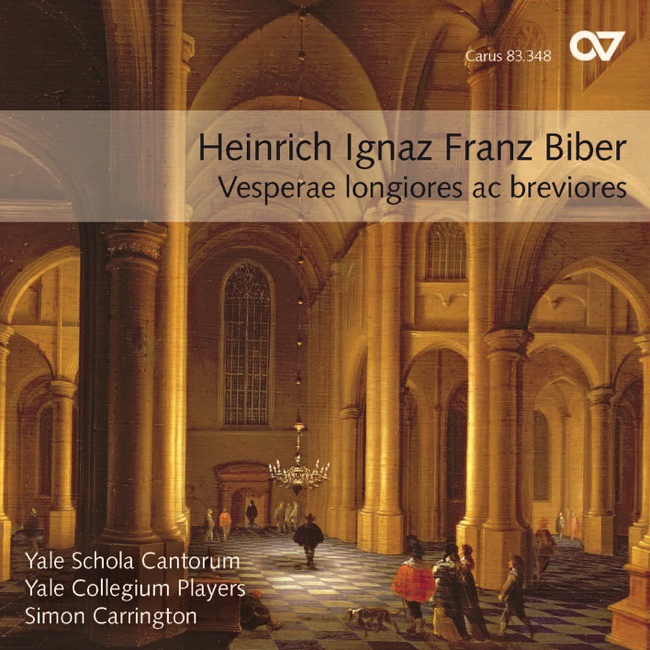
Heinrich Ignaz Franz von Biber
Laudate Dominum in A major (Vesperae Longiores I/4), C. 17
Works Info
Composer:Heinrich Ignaz Franz von BiberGenre:ChoralCompose Date:1693Publication Date:1693Average_duration:2:52Heinrich Ignaz Franz von Biber's 'Laudate Dominum in A major (Vesperae Longiores I/4), C. 17' is a sacred vocal work composed in the Baroque era. It was likely composed in the late 1670s or early 1680s, during Biber's tenure as Kapellmeister at the Salzburg court. The work is part of a larger collection of Vesperae Longiores, which includes settings of the Magnificat and other liturgical texts. The 'Laudate Dominum' is scored for solo soprano, four-part choir, and continuo. It is divided into three movements: an opening chorus, a solo aria, and a closing chorus. The first movement, marked 'Allegro', is a joyful and celebratory setting of the text 'Laudate Dominum omnes gentes' ('Praise the Lord, all nations'). The choir and soloist alternate in singing the text, with the choir providing a rich harmonic backdrop for the soloist's virtuosic melodic lines. The second movement, marked 'Adagio', is a solo aria for soprano. The text, 'Sit nomen Domini benedictum' ('Blessed be the name of the Lord'), is set to a gentle and introspective melody. The continuo provides a simple and understated accompaniment, allowing the soprano to express the text with clarity and emotion. The final movement, marked 'Allegro', returns to the joyful mood of the opening chorus. The text, 'Sicut erat in principio' ('As it was in the beginning'), is a doxology that brings the work to a triumphant close. The choir and soloist sing together in a grand and exultant setting of the text, with the continuo providing a lively and energetic accompaniment. Overall, Biber's 'Laudate Dominum' is a masterful example of Baroque sacred music. Its use of solo and choral voices, along with its rich harmonies and expressive melodies, make it a powerful and moving work that continues to be performed and admired today.More....
Works Music
Released Music