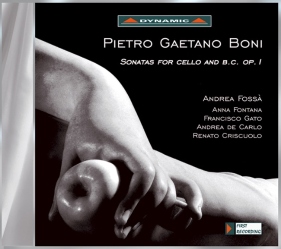
Gaetano Boni
Sonata for cello & harpsichord, Op. 1/3
Released Album
Recent Album

Works Info
Composer:Gaetano BoniGenre:ChamberStyle:Chamber MusicCompose Date:1717Average_duration:7:31Movement_count:3Movement ....Gaetano Boni's Sonata for cello & harpsichord, Op. 1/3, was composed in the late 18th century. The exact date of composition is unknown, but it is believed to have been written around 1780. The sonata was premiered in Italy, where Boni was born and spent most of his life. The sonata consists of three movements: Allegro, Adagio, and Allegro. The first movement, Allegro, is in sonata form and features a lively and energetic melody. The cello and harpsichord take turns playing the main theme, with the harpsichord providing a steady accompaniment. The second movement, Adagio, is a slow and melancholic piece that showcases the expressive capabilities of the cello. The harpsichord provides a delicate and understated accompaniment, allowing the cello to take center stage. The final movement, Allegro, is a lively and playful piece that features a catchy melody and intricate interplay between the cello and harpsichord. One of the most notable characteristics of Boni's Sonata for cello & harpsichord is its use of the harpsichord as a solo instrument. While the harpsichord was commonly used as an accompaniment instrument during the Baroque period, it was rarely used as a solo instrument in later periods. Boni's sonata is one of the few examples of a harpsichord solo in the Classical period. Another characteristic of the sonata is its use of counterpoint. Boni was a skilled contrapuntist, and the sonata features intricate and complex interplay between the cello and harpsichord. The use of counterpoint adds depth and complexity to the sonata, making it a challenging and rewarding piece for performers and listeners alike. Overall, Gaetano Boni's Sonata for cello & harpsichord, Op. 1/3, is a charming and engaging piece that showcases the talents of both the cello and harpsichord. Its use of the harpsichord as a solo instrument and its intricate counterpoint make it a unique and noteworthy work in the Classical repertoire.More....
Works Music
Released Music