Michel Corrette
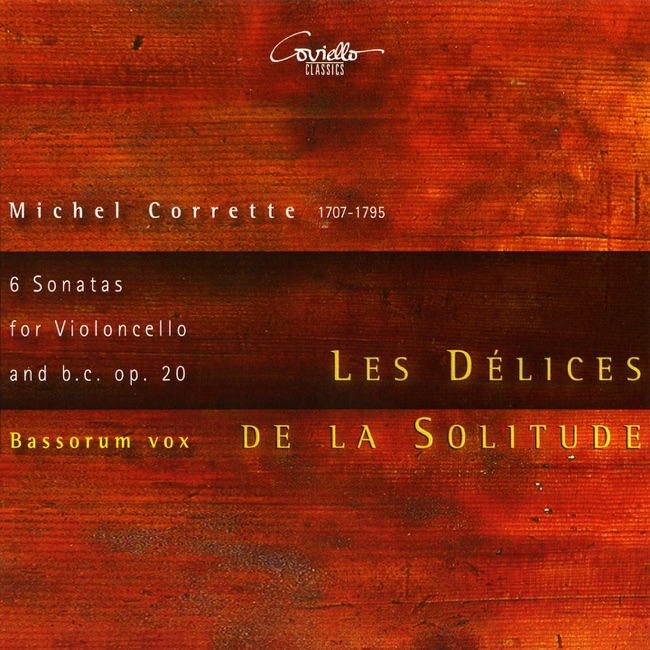
Sonata for cello, viol, bassoon & continuo, Op. 20/3
Released Album
Recent Album
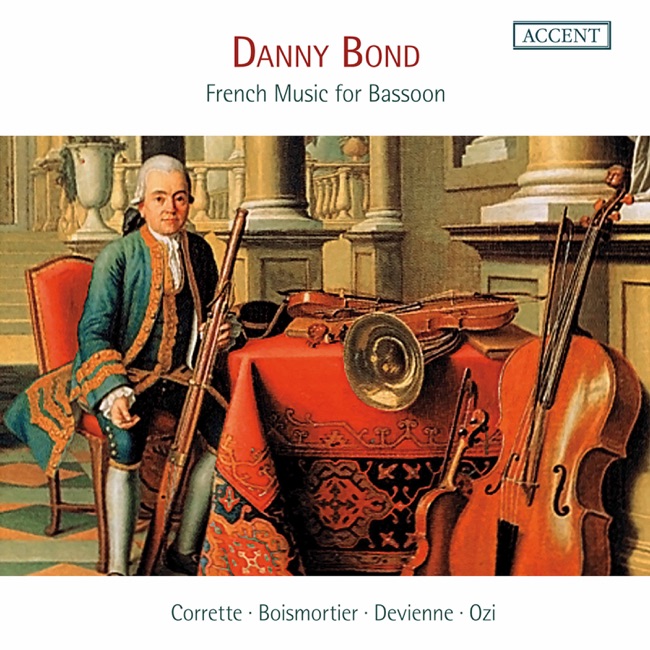
Works Info
Composer:Michel CorretteGenre:ChamberStyle:SonataAverage_duration:6:44The Sonata for cello, viol, bassoon & continuo, Op. 20/3, was composed by Michel Corrette, a French composer and organist, in the mid-18th century. The exact date of composition is unknown, but it is believed to have been written around 1750. The piece was premiered in Paris, where Corrette was based, and quickly gained popularity among musicians and audiences alike. The sonata consists of four movements, typical of the Baroque era. The first movement, marked Allegro, is a lively and energetic piece that showcases the virtuosity of the performers. The second movement, marked Adagio, is a slower and more contemplative piece that allows for more expressive playing. The third movement, marked Allegro, is another fast-paced piece that features intricate interplay between the cello, viol, and bassoon. The final movement, marked Allegro, is a lively and joyful piece that brings the sonata to a rousing conclusion. One of the characteristics of the sonata is its use of the continuo, a common feature of Baroque music. The continuo is a bass line that is played by a keyboard instrument, such as a harpsichord or organ, and a bass instrument, such as a cello or bassoon. The continuo provides a harmonic foundation for the other instruments to play over, and allows for improvisation and ornamentation. Another characteristic of the sonata is its use of counterpoint, a technique in which two or more melodic lines are played simultaneously. Corrette was known for his skill in writing counterpoint, and the sonata showcases his ability to create complex and intricate musical textures. Overall, the Sonata for cello, viol, bassoon & continuo, Op. 20/3, is a lively and engaging piece of Baroque music that highlights the virtuosity of the performers and the skill of the composer. Its popularity has endured over the centuries, and it remains a beloved piece of music for both performers and audiences.More....
Works Music
Released Music