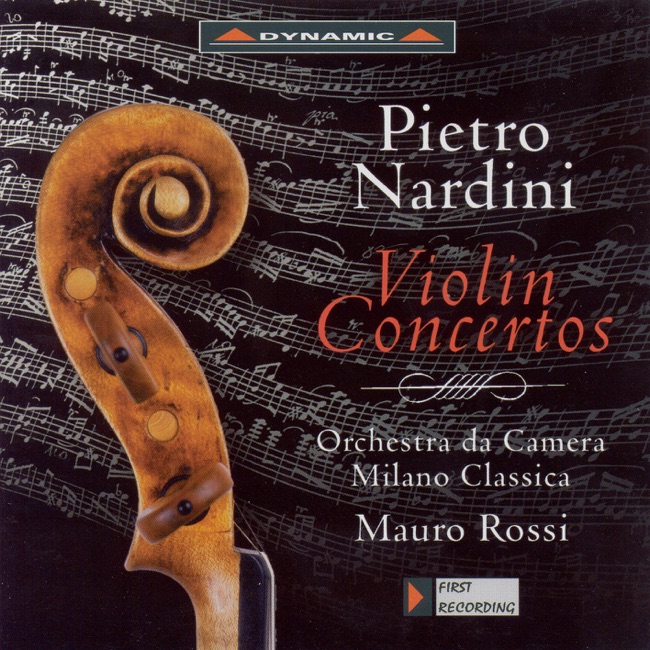
Pietro Nardini
Concerto for violin, strings & continuo in G major
Released Album
Recent Album
Works Info
Composer:Pietro NardiniGenre:ConcertoStyle:ConcertoAverage_duration:16:22Movement_count:3Movement ....The Concerto for violin, strings & continuo in G major is a Baroque-era composition by Italian composer Pietro Nardini. It was composed in the late 18th century and premiered in Florence, Italy. The concerto is divided into three movements: Allegro, Adagio, and Allegro. The first movement, Allegro, is characterized by its lively and energetic tempo. The violin takes center stage, with the strings and continuo providing a supportive and complementary backdrop. The movement features a number of virtuosic passages for the solo violin, showcasing the technical prowess of the performer. The second movement, Adagio, is a slower and more contemplative piece. The violin takes on a more lyrical and expressive role, with the strings and continuo providing a gentle and understated accompaniment. The movement is marked by its emotional depth and sensitivity, with the solo violin conveying a sense of longing and introspection. The final movement, Allegro, returns to the lively and energetic tempo of the first movement. The violin once again takes center stage, with the strings and continuo providing a lively and rhythmic accompaniment. The movement features a number of intricate and challenging passages for the solo violin, showcasing the performer's technical skill and virtuosity. Overall, the Concerto for violin, strings & continuo in G major is a masterful example of Baroque-era composition. It showcases the technical prowess of the solo violinist while also highlighting the interplay between the soloist and the accompanying ensemble. The concerto's three movements offer a range of emotional and musical experiences, from the lively and energetic to the contemplative and introspective.More....
Works Music
Released Music