André Campra
Salve Regina
Released Album
Recent Album
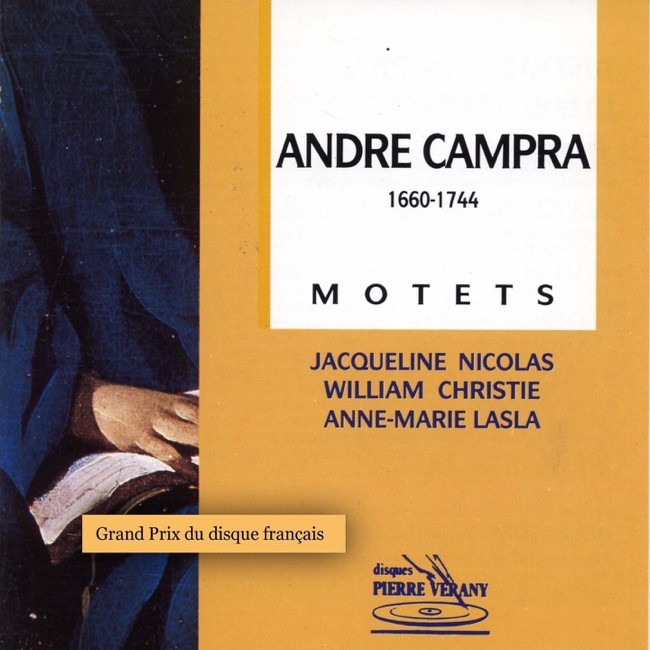
Works Info
Composer:André CampraGenre:ChoralStyle:MotetAverage_duration:5:31André Campra's 'Salve Regina' is a sacred choral work that was composed in the Baroque era. The piece was premiered in 1695 in Paris, France. It is a setting of the Marian antiphon 'Salve Regina', which is a hymn that is traditionally sung in the Catholic Church during the season of Lent. The work is divided into four movements, each of which is based on a different section of the 'Salve Regina' text. The first movement is a solemn and introspective setting of the opening lines of the hymn, "Hail, holy Queen, mother of mercy". The second movement is a lively and joyful setting of the text "Our life, our sweetness, and our hope". The third movement is a mournful and contemplative setting of the text "To thee do we cry, poor banished children of Eve". The final movement is a triumphant and exultant setting of the text "Turn then, most gracious advocate, thine eyes of mercy towards us". The characteristics of Campra's 'Salve Regina' are typical of Baroque sacred music. The work features a large choir, accompanied by a small orchestra consisting of strings, organ, and continuo. The vocal writing is highly ornamented and expressive, with frequent use of melismatic passages and intricate counterpoint. The harmonies are rich and complex, with frequent use of suspensions and dissonances to create tension and release. Overall, Campra's 'Salve Regina' is a beautiful and moving example of Baroque sacred music. Its combination of solemnity, joy, and contemplation make it a powerful expression of devotion to the Virgin Mary, and its intricate vocal and instrumental writing make it a masterpiece of the Baroque era.More....
Works Music
Released Music