


Heinrich Ignaz Franz von Biber
Sonata for 2 violins, 2 violas & continuo No. 2 in F major, C. 79
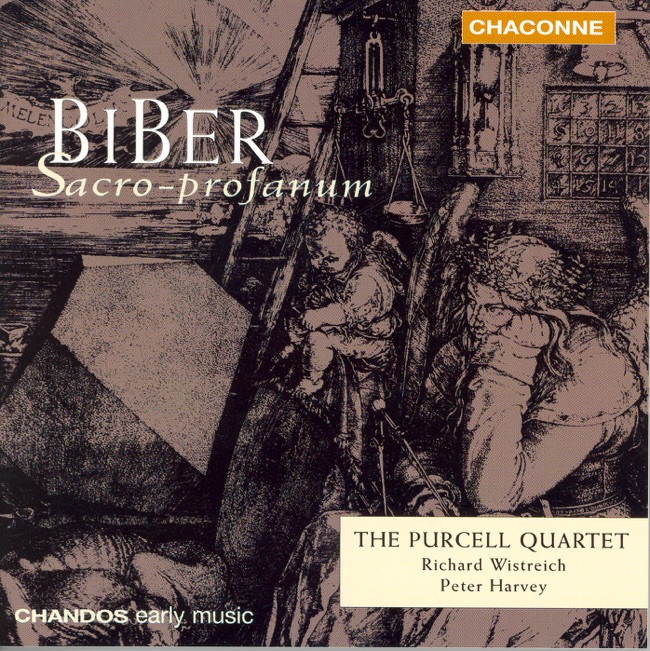
Works Info
Composer:Heinrich Ignaz Franz von BiberGenre:ChamberStyle:SonataCompose Date:1683Publication Date:1683Average_duration:6:38Heinrich Ignaz Franz von Biber's 'Sonata for 2 violins, 2 violas & continuo No. 2 in F major, C. 79' is a Baroque-era chamber music piece that was composed in the late 17th century. The exact date of composition is unknown, but it is believed to have been written between 1676 and 1681. The piece was premiered in Salzburg, Austria, where Biber was employed as a court musician. The sonata consists of six movements, each with its own unique character and style. The first movement is a lively and energetic Allegro, featuring intricate counterpoint and virtuosic violin passages. The second movement is a graceful and lyrical Adagio, with a beautiful melody that is passed between the violins and violas. The third movement is a lively and dance-like Allegro, with a playful and syncopated rhythm. The fourth movement is a stately and dignified Sarabande, with a slow and solemn tempo. The fifth movement is a lively and virtuosic Gigue, with a fast and lively tempo and intricate violin passages. The final movement is a lively and joyful Allegro, with a lively and energetic rhythm and virtuosic violin passages. The sonata is notable for its use of scordatura tuning, a technique in which the strings of the violin are tuned to a different pitch than usual. In this case, the violins are tuned to F, B-flat, E-flat, and A, instead of the usual G, D, A, and E. This allows for a wider range of notes and harmonies, and gives the piece a unique and distinctive sound. Overall, Biber's 'Sonata for 2 violins, 2 violas & continuo No. 2 in F major, C. 79' is a masterful example of Baroque chamber music, with its intricate counterpoint, virtuosic violin passages, and unique use of scordatura tuning. It remains a popular and beloved piece among classical music enthusiasts and performers.More....
Works Music
