


Johann Adolf Hasse
Concerto for flute, 2 violins, viola & continuo in G
Released Album
Recent Album
Works Info
Composer:Johann Adolf HasseGenre:ConcertoStyle:ConcertoAverage_duration:9:25Johann Adolf Hasse's Concerto for flute, 2 violins, viola & continuo in G is a Baroque concerto that was composed in the mid-18th century. The exact date of composition is unknown, but it is believed to have been written between 1740 and 1750. The concerto was premiered in Dresden, Germany, where Hasse was the court composer for the Elector of Saxony. The concerto consists of three movements: Allegro, Largo, and Allegro. The first movement is in a fast tempo and features the solo flute and the two violins playing in unison. The second movement is a slow and lyrical piece that showcases the beauty of the flute's sound. The final movement is a lively and energetic piece that brings the concerto to a thrilling conclusion. One of the characteristics of Hasse's concerto is its use of the ritornello form, which was a common structure in Baroque music. The ritornello is a recurring musical theme that is played by the orchestra and serves as a framework for the soloist's improvisations. Hasse's concerto also features virtuosic passages for the solo flute, which demonstrate the technical abilities of the performer. Another characteristic of Hasse's concerto is its use of ornamentation, which was a hallmark of Baroque music. Ornamentation refers to the embellishments that are added to the melody, such as trills, turns, and grace notes. Hasse's concerto features many ornamental passages, which add to the beauty and complexity of the music. Overall, Johann Adolf Hasse's Concerto for flute, 2 violins, viola & continuo in G is a beautiful and virtuosic piece of Baroque music. Its use of the ritornello form, ornamentation, and virtuosic passages for the solo flute make it a classic example of the Baroque concerto genre.More....
Works Music
Released Music
1
2:54
2
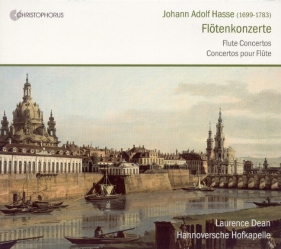
2:49
3
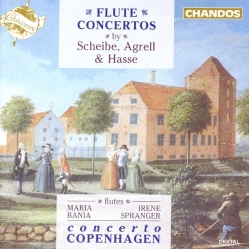
4:57