Elizabeth-Claude Jacquet de la Guerre
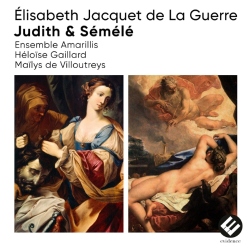
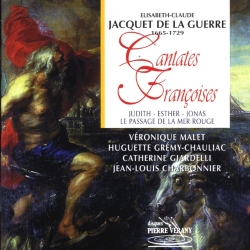
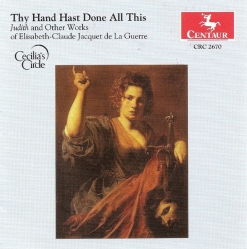
Judith
Released Album
Recent Album
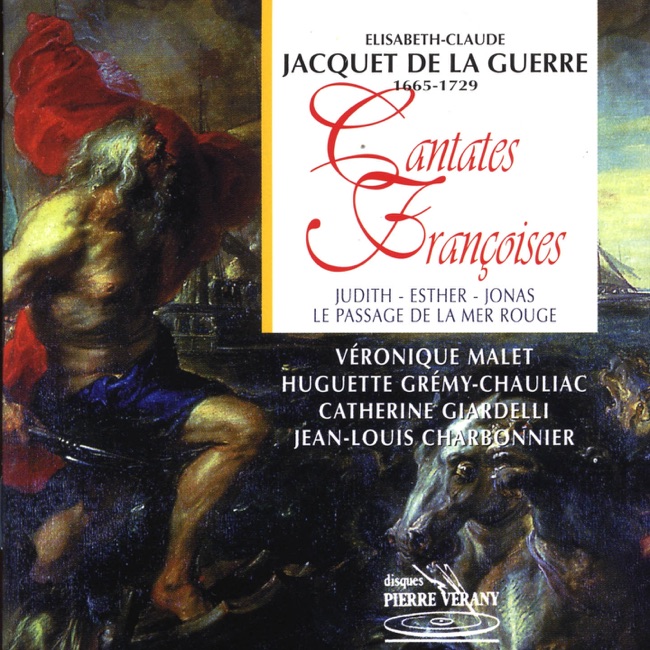
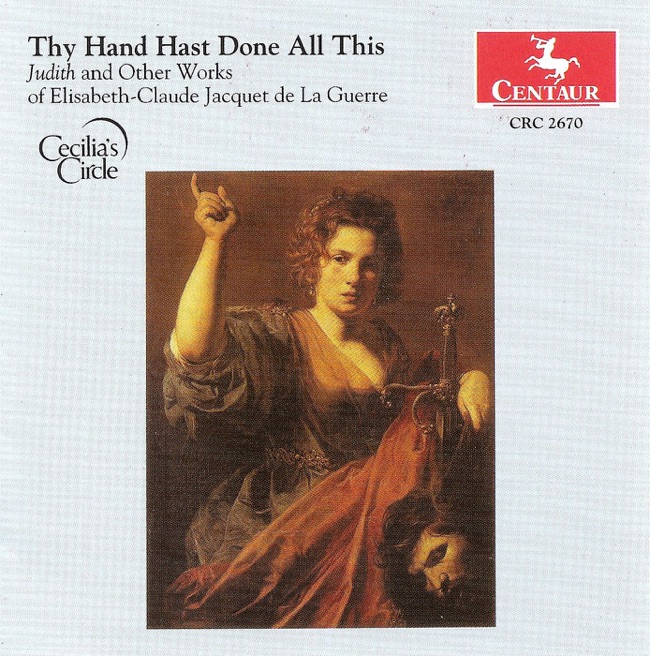
Works Info
Composer:Elizabeth-Claude Jacquet de la GuerreGenre:VocalStyle:CantataAverage_duration:18:02Movement_count:10Movement ....Elizabeth-Claude Jacquet de la Guerre was a French composer and harpsichordist who lived from 1665 to 1729. She was one of the few female composers of her time to achieve recognition and success, and her opera "Judith" is considered one of her most significant works. "Judith" was composed in 1693 and premiered at the Académie Royale de Musique in Paris on March 22 of that year. The libretto was written by Antoine Danchet and is based on the biblical story of Judith and Holofernes. The opera consists of five acts and is scored for a small orchestra, including strings, winds, and continuo. The first act opens with a chorus of Israelites lamenting their oppression by the Assyrians. Judith, a widow and respected member of the community, enters and sings a prayer for deliverance. The Assyrian general Holofernes arrives and demands that the Israelites surrender, but Judith convinces him to delay his attack until the following day. In the second act, Judith and her maid Abra plot to seduce and kill Holofernes. Judith sings a seductive aria, "Viens, Holoferne," in which she promises to be his lover if he spares her people. Holofernes is taken in by her charms and invites her to a banquet. The third act takes place at the banquet, where Judith sings a charming aria, "Que tout cède à mes charmes," as she pours wine for Holofernes. She then sings a more ominous aria, "Je vais frapper le coup mortel," in which she reveals her plan to kill him. After Holofernes falls asleep, Judith beheads him with his own sword. The fourth act opens with a chorus of Assyrians mourning Holofernes' death. Judith returns to the Israelite camp with his head, and the Israelites celebrate their victory. However, the Assyrian army soon regroups and attacks again. The final act features a battle scene, in which the Israelites are victorious. Judith sings a triumphant aria, "Que la gloire de Dieu triomphe," and the opera ends with a chorus of Israelites praising God for their deliverance. "Judith" is notable for its strong female protagonist and its use of French dance forms, such as the minuet and gavotte, in the instrumental interludes. The opera also features a variety of vocal styles, from the lamenting choruses of the Israelites to the seductive arias of Judith. Overall, "Judith" is a significant work in the history of French opera and a testament to Jacquet de la Guerre's talent as a composer.More....