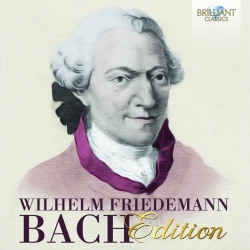
Wilhelm Friedemann Bach
Fugue for organ in G minor, F. 37 (BR A92)
Released Album
Recent Album


Works Info
Composer:Wilhelm Friedemann BachGenre:KeyboardStyle:FuguePublication Date:1968Average_duration:2:03Wilhelm Friedemann Bach, the eldest son of Johann Sebastian Bach, composed the 'Fugue for organ in G minor, F. 37 (BR A92)' in the mid-18th century. The exact date of composition is unknown, but it is believed to have been written during his time as the organist at the Liebfrauenkirche in Halle, Germany. The 'Fugue for organ in G minor' is a single-movement work that follows the traditional structure of a fugue. It begins with a short, melancholic theme played by the organ's pedals. This theme is then repeated and developed by the hands, with each voice entering in turn. The fugue's subject is characterized by its chromaticism and its use of suspensions, which create a sense of tension and release. The fugue's middle section features a new theme, played by the hands in a lively, dance-like rhythm. This theme is then combined with the original subject, creating a complex and intricate texture. The fugue's final section returns to the original subject, with each voice entering in turn and building to a powerful climax. The 'Fugue for organ in G minor' is a masterful example of Bach's skill as a composer and organist. It showcases his ability to create complex and intricate textures, while also demonstrating his understanding of the traditional forms and structures of Baroque music. The fugue's use of chromaticism and suspensions adds a sense of drama and emotion to the work, making it a powerful and moving piece of music. The 'Fugue for organ in G minor' premiered during Wilhelm Friedemann Bach's time as the organist at the Liebfrauenkirche in Halle, and it remains a beloved and frequently performed work in the organ repertoire today.More....
Works Music
Released Music
2
2:6