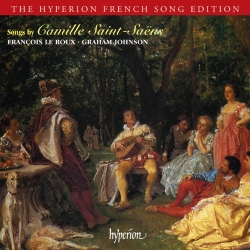
Camille Saint-Saëns
Guitares et mandolines
Released Album
Recent Album
-
 Various ArtistsMay 17, 2019
 -

-
Featured Album
Works Info
Composer:Camille Saint-SaënsGenre:VocalStyle:SongCompose Date:1890Average_duration:1:37Camille Saint-Saëns composed "Guitares et mandolines" in 1915. It was premiered on January 23, 1916, at the Salle Gaveau in Paris, with the composer himself conducting. The piece is a suite for two guitars and mandolin, and it consists of four movements. The first movement, "Prélude," is marked by a lively and rhythmic melody that is played by the mandolin. The guitars provide a harmonic accompaniment that is both delicate and intricate. The movement is characterized by its lightness and elegance, which are typical of Saint-Saëns' style. The second movement, "Sarabande," is a slow and stately dance that is played by the guitars. The mandolin provides a counterpoint to the guitars, adding a touch of brightness to the otherwise somber melody. The movement is marked by its melancholic and introspective character, which is typical of the sarabande form. The third movement, "Gavotte," is a lively and playful dance that is played by the mandolin. The guitars provide a rhythmic accompaniment that is both lively and intricate. The movement is characterized by its energy and vivacity, which are typical of the gavotte form. The fourth and final movement, "Final," is a fast and lively piece that is played by all three instruments. The movement is marked by its virtuosity and technical difficulty, which are typical of Saint-Saëns' style. The guitars and mandolin engage in a lively and intricate dialogue, creating a sense of excitement and anticipation that builds to a thrilling conclusion. Overall, "Guitares et mandolines" is a charming and elegant suite that showcases Saint-Saëns' mastery of melody, harmony, and rhythm. The piece is characterized by its lightness, elegance, and technical virtuosity, which are typical of the composer's style.More....
Works Music
Released Music

Featured Music