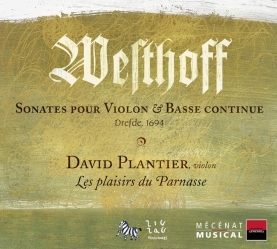
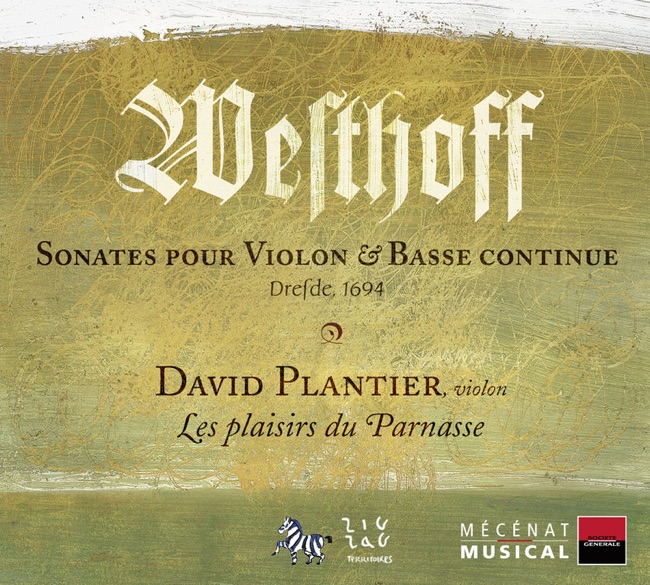
Johann Paul von Westhoff
Sonata for violin & continuo No. 4 in D minor
Released Album
Recent Album
Works Info
Composer:Johann Paul von WesthoffGenre:ChamberStyle:Chamber MusicAverage_duration:10:55Movement_count:5Movement ....Johann Paul von Westhoff's Sonata for violin & continuo No. 4 in D minor is a Baroque composition that was composed in the late 17th century. The exact date of composition is unknown, but it is believed to have been written between 1680 and 1690. The sonata is one of the most significant works of Westhoff, who was a German Baroque composer and violinist. The sonata is divided into four movements, which are marked as follows: Adagio, Allegro, Sarabande, and Gigue. The first movement, Adagio, is a slow and expressive piece that sets the tone for the entire sonata. The second movement, Allegro, is a fast and lively piece that showcases the virtuosity of the violinist. The third movement, Sarabande, is a slow and stately dance that is characterized by its graceful and elegant melody. The final movement, Gigue, is a fast and energetic dance that brings the sonata to a thrilling conclusion. The sonata is characterized by its use of counterpoint, which is a technique that involves the interweaving of multiple melodies. This technique is particularly evident in the second and fourth movements, which feature complex and intricate melodies that are played simultaneously by the violin and continuo. The sonata also features a number of virtuosic passages for the violin, which require a high level of technical skill and precision. Overall, Johann Paul von Westhoff's Sonata for violin & continuo No. 4 in D minor is a masterpiece of Baroque music. Its intricate melodies, virtuosic passages, and use of counterpoint make it a challenging and rewarding piece for both performers and listeners alike.More....
Works Music
Released Music