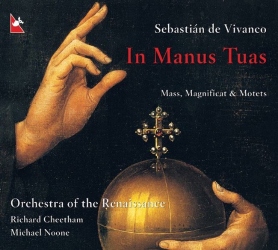
Sebastián de Vivanco
Versa est in luctum
Released Album
Recent Album
Featured Album
Works Info
Composer:Sebastián de VivancoGenre:ChoralStyle:MotetCompose Date:ca. 1600Average_duration:4:44Sebastián de Vivanco was a Spanish composer of the Renaissance period, born in Ávila in 1551. He was a prolific composer of sacred music, and his works were widely performed in Spain and throughout Europe. One of his most famous compositions is the motet "Versa est in luctum," which was written in honor of the death of Philip II of Spain. "Versa est in luctum" is a six-part motet, composed for two sopranos, alto, tenor, baritone, and bass. It is written in the style of the Spanish Renaissance, with rich harmonies and complex polyphony. The text of the motet is taken from the Book of Job, and it is a lamentation for the death of a great leader. The motet is divided into three movements. The first movement is a mournful introduction, with the voices singing in unison. The second movement is a complex polyphonic section, with each voice singing a different melody. The third movement is a return to the mournful theme of the first movement, with the voices singing in unison once again. The characteristics of "Versa est in luctum" are typical of Vivanco's style. The motet is characterized by its rich harmonies, complex polyphony, and use of dissonance. Vivanco was known for his use of chromaticism, and this is evident in "Versa est in luctum." The motet is also notable for its use of word painting, with the music reflecting the meaning of the text. "Versa est in luctum" was premiered in 1598, at the funeral of Philip II of Spain. The motet was widely performed throughout Europe in the following centuries, and it remains a popular piece of sacred music to this day. Vivanco's contribution to the Spanish Renaissance music is significant, and his works continue to be studied and performed by musicians around the world.More....
Works Music
Released Music
Featured Music