


Mikhail Glinka
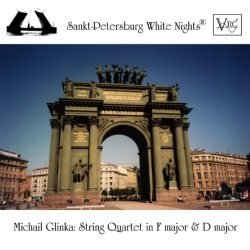
String Quartet No. 1 in D major, G. iii67
Released Album
Recent Album
-
-
-
 Taneev-Quartet of the Sankt-Petersburg Philharmonia1992
Works Info
Composer:Mikhail GlinkaGenre:ChamberStyle:QuartetCompose Date:1824Publication Date:1948Average_duration:34:21Mikhail Glinka's String Quartet No. 1 in D major, G. iii67, was composed in 1824 and premiered in St. Petersburg in 1825. The quartet consists of four movements: Allegro moderato, Scherzo, Andante cantabile, and Allegro con spirito. The first movement, Allegro moderato, begins with a lively and energetic theme played by the first violin. The second violin and viola then join in with a counterpoint melody, while the cello provides a steady bass line. The movement features a development section that explores the themes introduced in the exposition, and a recapitulation that brings the movement to a close. The second movement, Scherzo, is a playful and light-hearted piece that features a fast-paced melody played by the first violin. The other instruments provide a rhythmic accompaniment, and the movement includes a trio section that provides a contrast to the main theme. The third movement, Andante cantabile, is a slow and lyrical piece that showcases Glinka's gift for melody. The first violin plays a beautiful and expressive melody, while the other instruments provide a delicate accompaniment. The movement builds to a climax before returning to the main theme. The final movement, Allegro con spirito, is a lively and energetic piece that brings the quartet to a rousing conclusion. The movement features a fast-paced theme played by the first violin, with the other instruments providing a rhythmic accompaniment. The movement includes a development section that explores the themes introduced in the exposition, and a recapitulation that brings the quartet to a close. Overall, Glinka's String Quartet No. 1 in D major is a masterful work that showcases his skill as a composer. The quartet features beautiful melodies, intricate counterpoint, and a wide range of emotions, from playful and light-hearted to slow and lyrical to lively and energetic. It is a testament to Glinka's talent and his contribution to the development of Russian classical music.More....
Works Music
Released Music
2
14:57
3
17:3