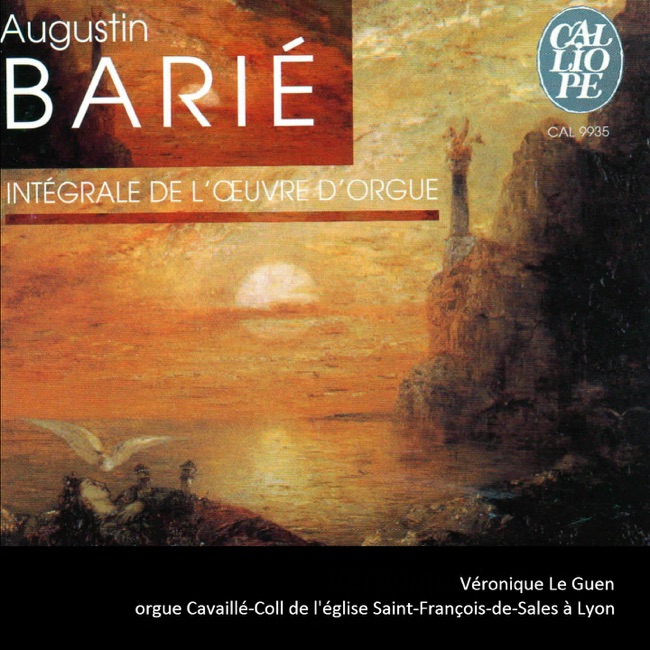
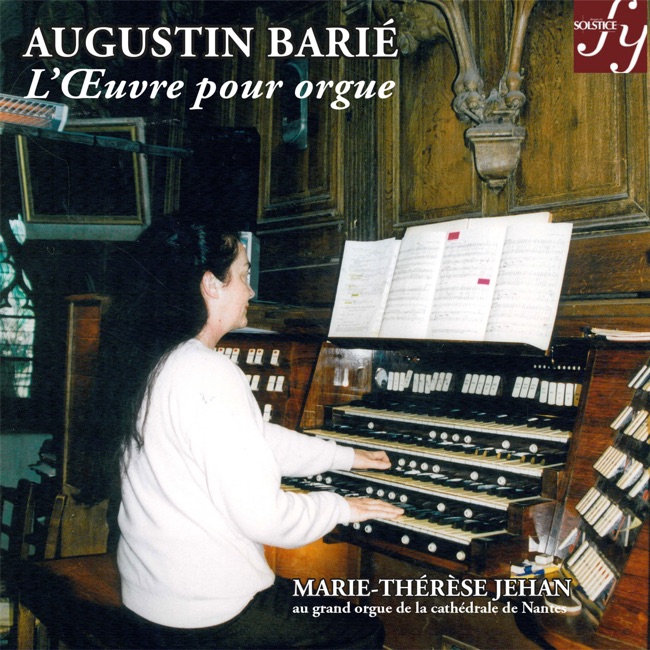
Augustin Barié
Pieces (3) for organ, Op. 7
Released Album
Recent Album

Works Info
Composer:Augustin BariéGenre:KeyboardStyle:KeyboardAverage_duration:16:18Augustin Barié was a French composer and organist who lived from 1883 to 1915. He was a student of Charles-Marie Widor and succeeded him as the organist at Saint-Sulpice in Paris. Barié's compositions are known for their virtuosic and expressive qualities, and his Pieces (3) for organ, Op. 7 is no exception. The Pieces (3) for organ, Op. 7 was composed in 1906 and premiered the same year at Saint-Sulpice. The work consists of three movements: Prelude, Adagio, and Toccata. Each movement showcases Barié's skill as an organist and his ability to create music that is both technically challenging and emotionally evocative. The Prelude is marked by its lively tempo and intricate figurations. The piece begins with a series of ascending arpeggios that set the stage for the rest of the movement. The Prelude is characterized by its use of chromaticism and its frequent changes in tonality. The movement builds to a climax before ending with a flourish. The Adagio is a stark contrast to the Prelude. It is a slow and contemplative piece that showcases Barié's ability to create beautiful and expressive melodies. The Adagio is marked by its use of legato phrasing and its rich harmonies. The movement is characterized by its use of rubato, which allows the performer to stretch and compress the tempo to create a sense of emotional intensity. The Toccata is the final movement of the Pieces (3) for organ, Op. 7. It is a virtuosic tour-de-force that showcases Barié's skill as an organist. The Toccata is marked by its fast tempo and its use of complex rhythms and figurations. The movement is characterized by its use of pedal points, which create a sense of tension and release. The Toccata builds to a thrilling climax before ending with a flourish. Overall, the Pieces (3) for organ, Op. 7 is a stunning work that showcases Barié's skill as a composer and organist. The work is characterized by its technical virtuosity, expressive melodies, and emotional intensity. It remains a popular work in the organ repertoire and is frequently performed in recitals and concerts.More....
Works Music
Released Music