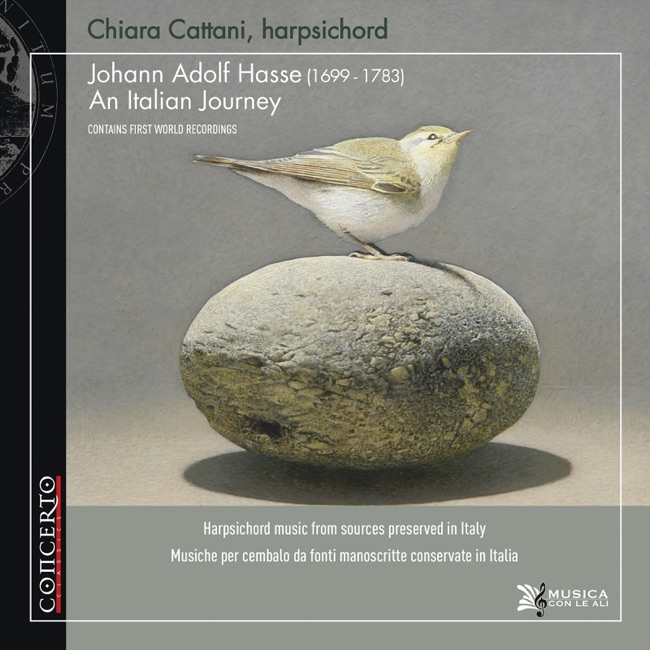
Johann Adolf Hasse
Sonata for organ in G minor
Released Album
Recent Album
Works Info
Composer:Johann Adolf HasseGenre:KeyboardStyle:SonataAverage_duration:7:04Johann Adolf Hasse's Sonata for Organ in G minor is a three-movement work that was composed in the mid-18th century. The exact date of composition is unknown, but it is believed to have been written sometime between 1740 and 1750. The sonata was premiered in Dresden, Germany, where Hasse was the court composer for the Elector of Saxony. The first movement of the sonata is marked "Andante," and it begins with a slow, mournful melody played by the organ's solo voice. The melody is then repeated in a higher register, accompanied by a simple, chordal accompaniment. The middle section of the movement features a more lively, dance-like melody, which is then followed by a return to the opening theme. The second movement is marked "Allegro," and it is a lively, energetic piece that features a fast, virtuosic solo part for the organ. The movement is characterized by its rapid, running passages and its use of counterpoint, with the organ's solo voice weaving in and out of the accompanying chords. The final movement of the sonata is marked "Adagio," and it is a slow, contemplative piece that features a simple, hymn-like melody played by the organ's solo voice. The melody is then repeated in a higher register, accompanied by a more complex, contrapuntal accompaniment. The movement ends with a return to the opening theme, played in a lower register and accompanied by a simple, chordal accompaniment. Overall, Hasse's Sonata for Organ in G minor is a beautiful and expressive work that showcases the capabilities of the organ as a solo instrument. The sonata's three movements are each distinct in character and mood, but they are united by their use of simple, memorable melodies and their skillful use of counterpoint.More....
Works Music
Released Music