


Ludwig van Beethoven
Canon in 2 parts in B flat major, WoO 188 "Gott ist eine feste Burg"
Released Album
Recent Album

Works Info
Composer:Ludwig van BeethovenGenre:VocalStyle:CanonCompose Date:1825Average_duration:0:17Ludwig van Beethoven's 'Canon in 2 parts in B flat major, WoO 188 Gott ist eine feste Burg' was composed in 1825, towards the end of his life. It was written as a tribute to Martin Luther's hymn 'Ein feste Burg ist unser Gott' (A Mighty Fortress Is Our God), which was a symbol of the Protestant Reformation. The canon was premiered in Vienna in 1826, a year after Beethoven's death. The canon is written for two voices, with the melody in the upper voice and the harmony in the lower voice. The piece is in B flat major and is structured in three movements. The first movement is a simple statement of the melody, with the two voices singing in unison. The second movement is a canon in which the lower voice enters a bar after the upper voice, creating a round-like effect. The third movement is a variation of the first movement, with the two voices singing in harmony. The canon is characterized by its simplicity and elegance. Beethoven's use of the canon form is masterful, creating a sense of unity and balance between the two voices. The melody is memorable and uplifting, and the harmony provides a solid foundation for the piece. The use of B flat major gives the piece a bright and joyful character, fitting for a hymn of praise. Overall, Beethoven's 'Canon in 2 parts in B flat major, WoO 188 Gott ist eine feste Burg' is a beautiful tribute to Martin Luther's hymn and a testament to Beethoven's skill as a composer. Its simplicity and elegance make it a timeless piece of music that continues to be enjoyed by audiences today.More....
Works Music
Released Music
1
Canon in 2 parts in B flat major, WoO 188 "God is a Mighty Fortress"
Gott ist eine feste Burg, WoO 188, Hess 265
35
2
19
3
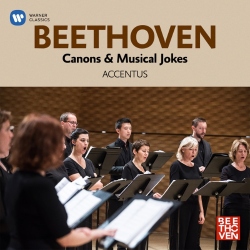
34
4
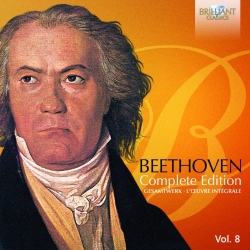
19
5
Canon in 2 parts in B flat major, WoO 188 "God is a Mighty Fortress"
Gott ist eine feste Burg: Rätselkanon a 2, WoO 188
19
6
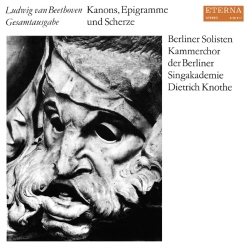
19
7

19