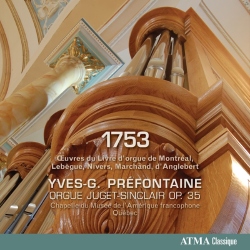
Guillaume Gabriel Nivers
Pièces du 2e ton ou du 1er transposé
Released Album
Recent Album
Works Info
Composer:Guillaume Gabriel NiversGenre:KeyboardAverage_duration:8:01Guillaume Gabriel Nivers was a French composer, organist, and music theorist who lived from 1632 to 1714. He was a prominent figure in the French Baroque era and is known for his contributions to organ music. One of his most famous works is the 'Pièces du 2e ton ou du 1er transposé', which was composed in 1665. The 'Pièces du 2e ton ou du 1er transposé' is a collection of organ pieces that consists of eight movements. It was written for the organ and is considered to be one of the most important works of the French Baroque era. The collection is divided into two parts, with the first part consisting of four movements and the second part consisting of four movements. The first movement of the collection is a prelude that is marked by its lively and energetic character. The second movement is a fugue that is characterized by its complex and intricate counterpoint. The third movement is a trio that features a dialogue between the organ and two other instruments. The fourth movement is a dialogue between the organ and a solo instrument, which is typically a violin or a flute. The second part of the collection begins with a prelude that is similar in character to the first movement of the first part. The second movement is a fugue that is more complex than the first fugue. The third movement is a trio that is similar in character to the third movement of the first part. The final movement is a dialogue between the organ and a solo instrument, which is typically a trumpet or a cornet. The 'Pièces du 2e ton ou du 1er transposé' is characterized by its use of counterpoint, which is a hallmark of the French Baroque era. The collection also features a variety of textures, including solos, duets, and trios. The pieces are written in a variety of keys, which demonstrates Nivers' skill as a composer. The 'Pièces du 2e ton ou du 1er transposé' premiered in 1665 and was well-received by audiences and critics alike. It remains a popular work among organists and is considered to be one of the most important works of the French Baroque era.More....
Works Music