Aribert Reimann
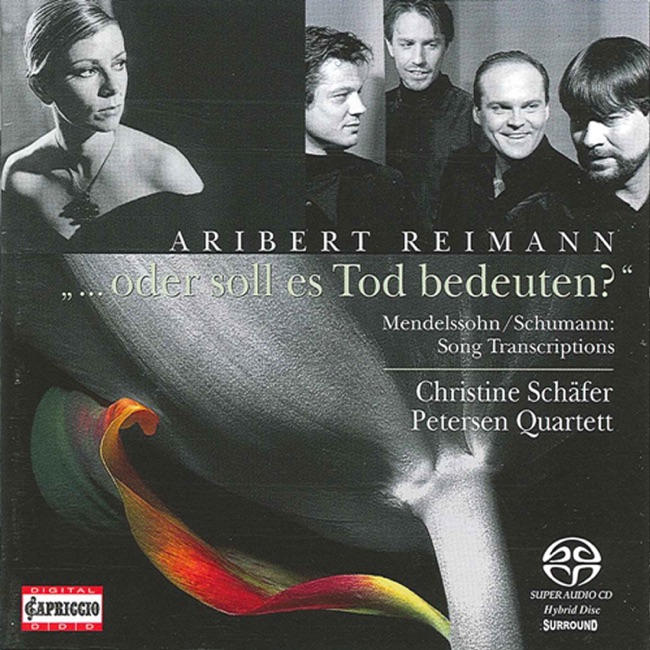
Mendelssohn's ...Oder Soll Es Tod Bedeuten?
Released Album
Works Info
Composer:Aribert ReimannGenre:VocalStyle:QuartetAverage_duration:23:39Aribert Reimann's "Mendelssohn's ...Oder Soll Es Tod Bedeuten?" is a song cycle composed in 1997 for baritone and piano. The work was premiered on October 17, 1997, at the Berliner Festwochen by Dietrich Fischer-Dieskau and Hartmut Höll. The cycle consists of six movements, each based on a poem by Felix Mendelssohn Bartholdy. The first movement, "Auf Flügeln des Gesanges," is a gentle and lyrical setting of Mendelssohn's famous poem. The second movement, "Neue Liebe," is more dramatic and intense, with the piano providing a driving accompaniment to the baritone's passionate singing. The third movement, "Hexenlied," is a spooky and atmospheric setting of a poem about witches and their spells. The fourth movement, "Frühlingslied," is a joyful and exuberant celebration of spring, with the piano providing a lively and playful accompaniment to the baritone's singing. The fifth movement, "Wasserfahrt," is a more contemplative and introspective setting of a poem about a boat journey on a river. The final movement, "O Tod, wie bitter bist du," is a somber and mournful setting of a poem about death. Reimann's setting of Mendelssohn's poems is characterized by a modernist approach to harmony and melody, with dissonant chords and angular melodies creating a sense of tension and unease. The piano accompaniment is also highly virtuosic, with complex rhythms and textures that add to the overall sense of drama and intensity. Overall, "Mendelssohn's ...Oder Soll Es Tod Bedeuten?" is a powerful and emotionally charged work that showcases Reimann's skill as a composer and his ability to bring new life to classic texts.More....
Works Music
Released Music