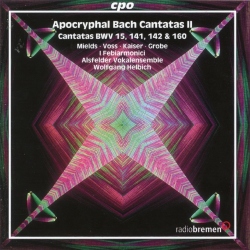
Johann Ludwig Bach
Denn du wirst meine Seelenicht in der Hölle lassen
Released Album
Recent Album

Works Info
Composer:Johann Ludwig BachGenre:ChoralStyle:ChoralCompose Date:before 1726Average_duration:20:59Movement_count:12Movement ....Johann Ludwig Bach, a German composer and musician, composed the cantata "Denn du wirst meine Seelenicht in der Hölle lassen" in the early 18th century. The exact date of composition is unknown, but it is believed to have been written between 1708 and 1717. The cantata was first performed in Weimar, Germany, where Bach was employed as a court musician. The cantata consists of three movements, each with its own distinct character and musical style. The first movement is a recitative, in which the soloist sings of the fear of being abandoned in hell. The second movement is an aria, in which the soloist expresses hope and trust in God's mercy. The final movement is a chorale, in which the choir sings a hymn of praise and thanksgiving. The music of "Denn du wirst meine Seelenicht in der Hölle lassen" is characterized by its emotional intensity and expressive power. Bach's use of chromaticism and dissonance creates a sense of tension and unease, while his use of counterpoint and harmony creates a sense of resolution and release. The cantata is also notable for its use of word painting, in which the music reflects the meaning of the text. Overall, "Denn du wirst meine Seelenicht in der Hölle lassen" is a powerful and moving work that reflects Bach's deep faith and his mastery of musical expression. Its premiere in Weimar was a testament to Bach's skill as a composer and musician, and it continues to be performed and appreciated by audiences today.More....
Works Music
Released Music