


Johann Gottlieb Janitsch
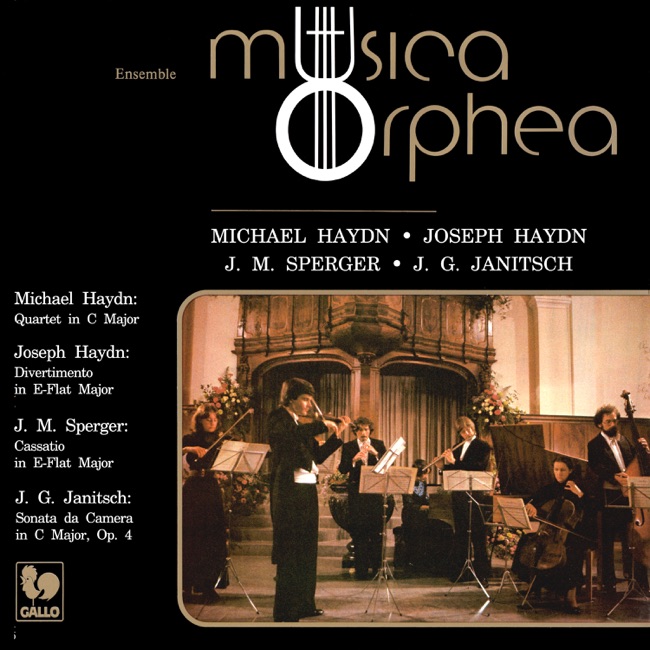
Sonata da Camera for flute, oboe, violin & continuo in C major, Op. 4
Released Album
Recent Album
Works Info
Composer:Johann Gottlieb JanitschGenre:ChamberStyle:Chamber MusicAverage_duration:11:53Movement_count:3Movement ....Johann Gottlieb Janitsch's 'Sonata da Camera for flute, oboe, violin & continuo in C major, Op. 4' is a chamber music piece that was composed in the early 18th century. The exact date of composition is not known, but it is believed to have been written around 1720. The piece was premiered in Berlin, where Janitsch was employed as a court musician. The 'Sonata da Camera' is divided into four movements, typical of the Baroque era. The first movement is marked Allegro and is in a binary form. The second movement is marked Adagio and is a slow, lyrical piece that showcases the expressive capabilities of the instruments. The third movement is marked Allegro and is a lively dance-like piece. The final movement is marked Presto and is a fast, energetic piece that brings the sonata to a thrilling conclusion. The 'Sonata da Camera' is characterized by its use of counterpoint, a technique that was popular in the Baroque era. The instruments are treated as equals, with each having its own distinct voice and role in the music. The flute, oboe, and violin are often heard playing in unison or in imitation of each other, creating a rich and complex texture. Janitsch's use of harmony is also notable in the 'Sonata da Camera'. He employs a variety of chord progressions and modulations, creating a sense of tension and release throughout the piece. The continuo, typically played by a harpsichord or cello, provides a steady foundation for the other instruments to build upon. Overall, the 'Sonata da Camera for flute, oboe, violin & continuo in C major, Op. 4' is a fine example of Baroque chamber music. Its intricate counterpoint, expressive melodies, and lively rhythms make it a joy to listen to and perform.More....
Works Music
Released Music
1
5:20
2
2:8
3
2:8