Etienne Moulinié
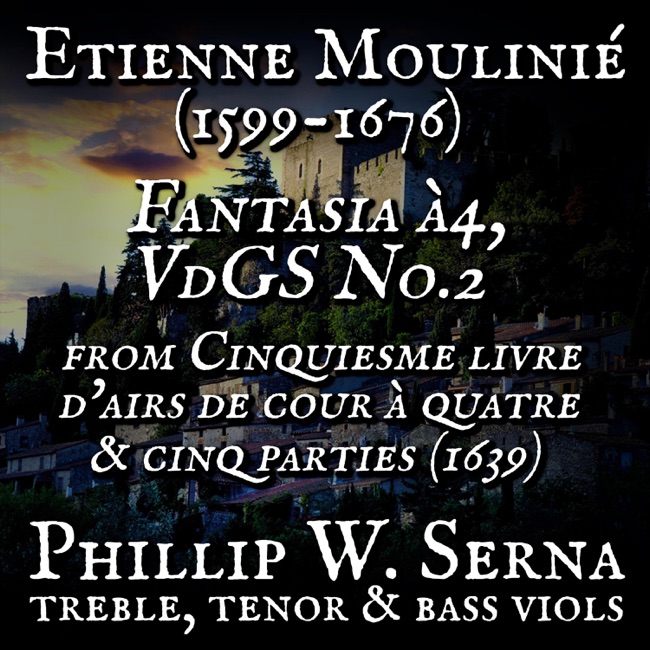
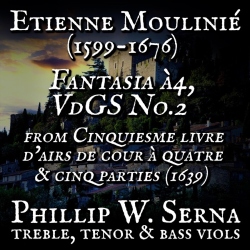
Fantaisie for 4 viols No. 2
Released Album
Recent Album

Works Info
Composer:Etienne MouliniéGenre:ChamberStyle:FantasyAverage_duration:4:24Etienne Moulinié's 'Fantaisie for 4 viols No. 2' is a piece of chamber music that was composed in the early 17th century. The exact date of its composition is unknown, but it is believed to have been written sometime between 1610 and 1620. The piece was first performed in Paris, France, where Moulinié was a prominent composer and musician. The 'Fantaisie for 4 viols No. 2' is a four-movement work that is scored for four viols, which are stringed instruments that were popular during the Renaissance and Baroque periods. The first movement is marked "Fantaisie," and it is a lively and energetic piece that features intricate counterpoint and virtuosic playing from all four instruments. The second movement is a slow and melancholy piece that is marked "Lament," and it features a beautiful melody that is passed between the four viols. The third movement is marked "Courante," and it is a fast and lively dance that features syncopated rhythms and intricate ornamentation. The final movement is marked "Gigue," and it is a lively and energetic dance that features fast, virtuosic playing from all four instruments. One of the characteristics of Moulinié's 'Fantaisie for 4 viols No. 2' is its use of counterpoint, which is a technique that involves the interweaving of multiple melodies to create a complex and harmonically rich texture. Moulinié was known for his skillful use of counterpoint, and this piece is a prime example of his mastery of the technique. Another characteristic of the piece is its use of dance rhythms, which were a common feature of music during the Renaissance and Baroque periods. The 'Fantaisie for 4 viols No. 2' features several different dance rhythms, including the courante and the gigue, which were popular dances during the time period. Overall, Etienne Moulinié's 'Fantaisie for 4 viols No. 2' is a beautiful and complex piece of chamber music that showcases the composer's skillful use of counterpoint and his mastery of dance rhythms. Its premiere in Paris would have been a significant event in the musical world of the early 17th century, and it continues to be performed and appreciated by musicians and audiences today.More....
Works Music
Released Music
1
8:6