


Antonio Caldara
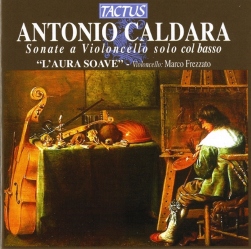
Sonata for cello & continuo in D minor
Released Album
Recent Album
Featured Album
Works Info
Composer:Antonio CaldaraGenre:ChamberStyle:SonataAverage_duration:9:34Antonio Caldara's Sonata for cello & continuo in D minor is a Baroque composition that was composed in the early 18th century. The exact date of composition is unknown, but it is believed to have been written between 1700 and 1720. The sonata is a three-movement work that features a solo cello accompanied by a continuo, which is typically a harpsichord or organ. The sonata's premiere is also unknown, but it is likely that it was first performed in a private setting for a patron or small audience. The piece was likely intended for performance in a chamber music setting, rather than in a large concert hall. The first movement of the sonata is marked "Adagio" and is in a slow, mournful tempo. The cello begins with a solo melody that is then joined by the continuo. The movement features a number of expressive and virtuosic passages for the cello, including rapid runs and arpeggios. The overall mood of the movement is melancholic and introspective. The second movement is marked "Allegro" and is in a faster, more lively tempo. The cello and continuo engage in a lively dialogue, with the cello taking the lead in many passages. The movement features a number of technical challenges for the cello, including rapid string crossings and complex rhythms. The overall mood of the movement is energetic and joyful. The final movement is marked "Allegro" and is in a fast, dance-like tempo. The cello and continuo engage in a lively and playful dialogue, with the cello taking the lead in many passages. The movement features a number of technical challenges for the cello, including rapid runs and complex rhythms. The overall mood of the movement is light-hearted and joyful. Overall, Caldara's Sonata for cello & continuo in D minor is a virtuosic and expressive work that showcases the capabilities of the cello as a solo instrument. The piece is notable for its technical challenges and expressive melodies, as well as its use of the continuo to provide a rich harmonic backdrop for the cello.More....
Works Music
Released Music
Featured Music
1
2:58
2
2:41
3
2:37
4
1:44