Johann Christian Bach
Symphonie Concertante in G major, CW C45 (T. 286/4)
Released Album
Recent Album
Works Info
Composer:Johann Christian BachGenre:ConcertoStyle:ConcertoCompose Date:1776First Performance:May 6, 1776Average_duration:20:53Movement_count:3Movement ....Johann Christian Bach's 'Symphonie Concertante in G major, CW C45 (T. 286/4)' was composed in the late 18th century. The exact date of composition is unknown, but it is believed to have been written between 1770 and 1780. The piece was premiered in London, where Bach was living and working at the time. The 'Symphonie Concertante' is a four-movement work that features solo parts for violin, cello, oboe, and bassoon, as well as a full orchestra. The first movement is marked Allegro con spirito and features a lively, energetic theme that is passed between the soloists and the orchestra. The second movement, marked Andante, is a lyrical and expressive adagio that showcases the soloists' ability to play with sensitivity and emotion. The third movement, marked Allegro assai, is a fast and playful scherzo that features intricate interplay between the soloists and the orchestra. The final movement, marked Allegro molto, is a lively and joyful finale that brings the piece to a rousing conclusion. One of the characteristics of the 'Symphonie Concertante' is its use of solo instruments. Bach was known for his skill in writing for solo instruments, and this piece is no exception. The solo parts are challenging and virtuosic, requiring a high level of technical skill and musicality from the performers. Another characteristic of the piece is its use of classical forms and structures. The four-movement structure, with its fast-slow-fast finale, is typical of classical symphonies and concertos. Overall, Johann Christian Bach's 'Symphonie Concertante in G major, CW C45 (T. 286/4)' is a lively and engaging work that showcases the talents of both the soloists and the orchestra. Its use of classical forms and structures, combined with Bach's skillful writing for solo instruments, make it a standout piece in the classical repertoire.More....
Works Music
Released Music
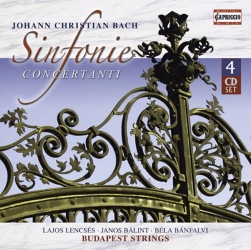
2
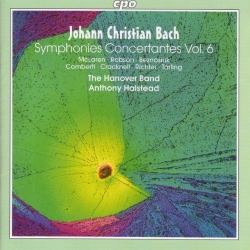
Symphony Concertante in G major, CW C45 (T. 286/4)
Cadenza in C major (attributed to Symph. Conc., C 45)
2:37