


Claude Debussy
Le roi Lear, L. 107
Released Album
Recent Album
-

-
 Sinfonietta Shizuoka, JapanJuly 19, 2019
 -

-

-

-

-

-
-

-

-
Works Info
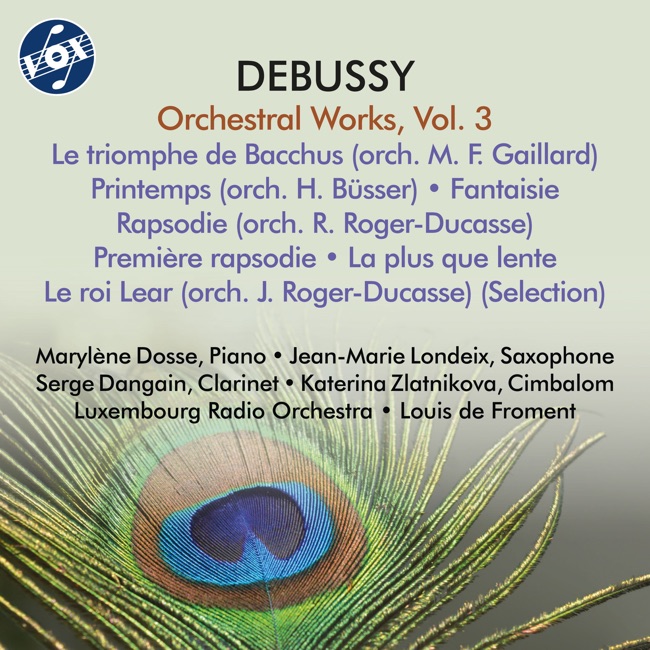
Composer:Claude DebussyGenre:OrchestralStyle:Incidental MusicCompose Date:1904Average_duration:4:50Movement_count:2Movement ....Claude Debussy's "Le roi Lear, L. 107" is a symphonic poem based on William Shakespeare's play "King Lear." Debussy composed the piece in 1904, and it premiered on February 27, 1904, in Paris, conducted by Camille Chevillard. The piece is divided into three movements, each representing a different aspect of the play. The first movement, "Lear," is a depiction of the king's descent into madness. It begins with a somber, mournful theme played by the cellos and basses, which is then taken up by the rest of the orchestra. The music becomes increasingly dissonant and chaotic as Lear's mental state deteriorates, with the brass and percussion adding to the sense of turmoil. The second movement, "The Fool," is a lighter, more playful piece that represents the character of the same name. The music is characterized by a jaunty, syncopated rhythm and a whimsical melody played by the woodwinds. The movement ends with a sudden, jarring chord that represents the Fool's death. The final movement, "The Storm," is a dramatic depiction of the tempest that occurs in the play. The music is turbulent and chaotic, with the orchestra representing the wind and rain. The movement builds to a climax with a powerful brass fanfare, before subsiding into a quiet, mournful coda. Overall, "Le roi Lear" is a complex and emotionally charged work that showcases Debussy's skill as a composer. The piece is notable for its use of dissonance and unconventional harmonies, which were groundbreaking at the time. It remains a popular and influential work in the classical repertoire.More....
Works Music
Released Music









Main Perform Artists