William Schuman
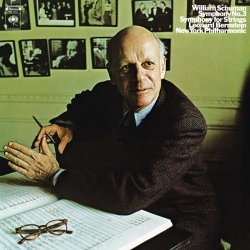
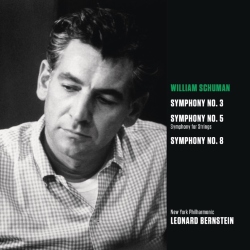
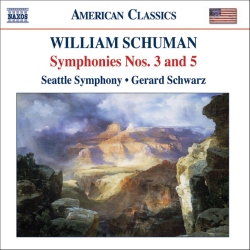
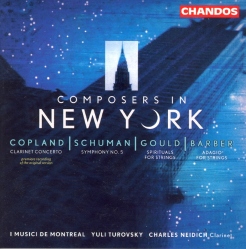
Symphony No. 5 "Symphony for Strings"
Released Album
Recent Album
Works Info
Composer:William SchumanGenre:SymphonyStyle:SymphonyCompose Date:1943First Performance:Nov 12, 1943Average_duration:17:45Movement_count:3Movement ....Symphony No. 5 Symphony for Strings is a composition by American composer William Schuman. It was composed in 1943 and premiered on January 22, 1944, by the Boston Symphony Orchestra under the direction of Serge Koussevitzky. The symphony is divided into three movements and has a total duration of approximately 20 minutes. The first movement, marked "Allegro," is characterized by its energetic and rhythmic drive. The movement opens with a lively theme played by the violins, which is then taken up by the rest of the string section. The music builds in intensity, with Schuman using a variety of rhythmic and harmonic devices to create a sense of forward momentum. The movement ends with a brief coda that brings the music to a dramatic close. The second movement, marked "Larghissimo," is a slow and contemplative piece. Schuman uses rich harmonies and expressive melodies to create a sense of introspection and reflection. The movement is notable for its use of extended techniques, such as sul ponticello (playing near the bridge of the instrument) and harmonics (producing a high-pitched, ethereal sound). The movement ends quietly, with a delicate passage played by the violins. The final movement, marked "Molto vivace," is a lively and playful piece. Schuman uses syncopated rhythms and playful melodies to create a sense of joy and exuberance. The movement features a number of virtuosic passages for the string players, including rapid runs and intricate arpeggios. The music builds to a frenzied climax before coming to a sudden stop. Overall, Symphony No. 5 Symphony for Strings is a masterful work that showcases Schuman's skill as a composer. The symphony is notable for its use of rhythmic and harmonic devices, as well as its expressive melodies and rich harmonies. It is a testament to the power and versatility of the string orchestra, and remains a popular work in the repertoire today.More....
Works Music
Released Music