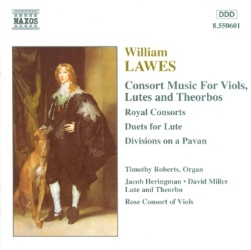
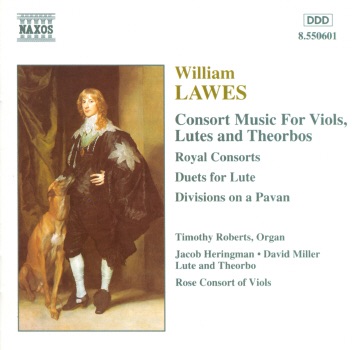
William Lawes
Royal Consort in D major for 2 Theorbos
Released Album
Recent Album
Works Info
Composer:William LawesGenre:ChamberStyle:Chamber MusicAverage_duration:12:40Movement_count:6Movement ....The Royal Consort in D major for 2 Theorbos is a piece of music composed by William Lawes, an English composer and musician who lived during the 17th century. The piece was composed in the early 1630s, during the reign of King Charles I, and was likely performed at court and other aristocratic gatherings. The Royal Consort in D major is a collection of six movements, each of which is characterized by its intricate harmonies, complex counterpoint, and virtuosic solo passages. The first movement, marked "Fantasia," is a free-form piece that showcases the composer's skill at creating intricate and varied textures using only two instruments. The second movement, marked "Almaine," is a lively dance in triple meter that features a series of intricate variations on a simple melodic theme. The third movement, marked "Courante," is a fast-paced dance in quadruple meter that features a series of intricate runs and arpeggios. The fourth movement, marked "Saraband," is a slow, stately dance in triple meter that features a series of rich, sonorous harmonies. The fifth movement, marked "Fantasia," is another free-form piece that showcases the composer's skill at creating complex and varied textures using only two instruments. The final movement, marked "Corant," is a fast-paced dance in triple meter that features a series of intricate runs and arpeggios. Throughout the piece, Lawes demonstrates his mastery of the theorbo, a large lute-like instrument that was popular in the 17th century. His use of complex harmonies, intricate counterpoint, and virtuosic solo passages make the Royal Consort in D major a masterpiece of the early Baroque era. The piece was likely premiered at court or other aristocratic gatherings, where it would have been performed by skilled musicians for the entertainment of the king and his courtiers. Today, the Royal Consort in D major remains a popular piece among early music enthusiasts and is frequently performed by professional and amateur musicians alike. Its intricate harmonies, complex counterpoint, and virtuosic solo passages continue to captivate audiences nearly 400 years after it was first composed.More....
Works Music