Heinrich Ignaz Franz von Biber
Sonata for violin & continuo No. 4 in D major, C. 141
Released Album
Recent Album

Works Info
Composer:Heinrich Ignaz Franz von BiberGenre:ChamberStyle:SonataCompose Date:1681Publication Date:1681Average_duration:10:45Heinrich Ignaz Franz von Biber's Sonata for violin & continuo No. 4 in D major, C. 141, is a Baroque-era composition that was likely composed in the late 17th century. The piece is believed to have been premiered in Salzburg, Austria, where Biber was employed as a court musician. The sonata is comprised of four movements: Preludio, Allemande, Sarabande, and Gigue. The Preludio is a lively and virtuosic movement that showcases the technical abilities of the violinist. The Allemande is a more subdued and introspective movement, characterized by its flowing, dance-like rhythm. The Sarabande is a slow and stately movement, with a mournful and expressive melody. The final movement, the Gigue, is a lively and energetic dance that brings the sonata to a rousing conclusion. One of the most notable characteristics of Biber's Sonata for violin & continuo No. 4 is its use of scordatura tuning. Scordatura is a technique in which the strings of the violin are tuned to a different pitch than their standard tuning. In this sonata, the violin is tuned to D-A-D-F# instead of its usual G-D-A-E tuning. This allows the violinist to play certain passages with greater ease and clarity, and also creates a unique and distinctive sound. Another notable characteristic of the sonata is its use of continuo accompaniment. The continuo part is typically played on a harpsichord or organ, and provides a harmonic foundation for the violinist to play over. The continuo part is often improvised, allowing for a great deal of flexibility and variation in performance. Overall, Biber's Sonata for violin & continuo No. 4 in D major, C. 141, is a masterful example of Baroque-era chamber music. Its technical demands and unique tuning make it a challenging and rewarding piece for violinists to perform, while its expressive melodies and harmonies make it a pleasure for audiences to listen to.More....
Works Music
Released Music
1
3:44
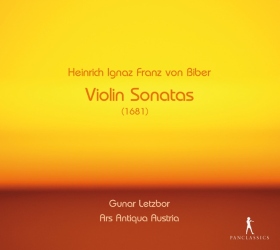
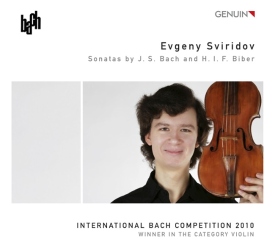
5
12:7