Francesco Geminiani
Concerto Grosso No. 5 in A minor (after Corelli 3/10)
Released Album
Recent Album
Works Info
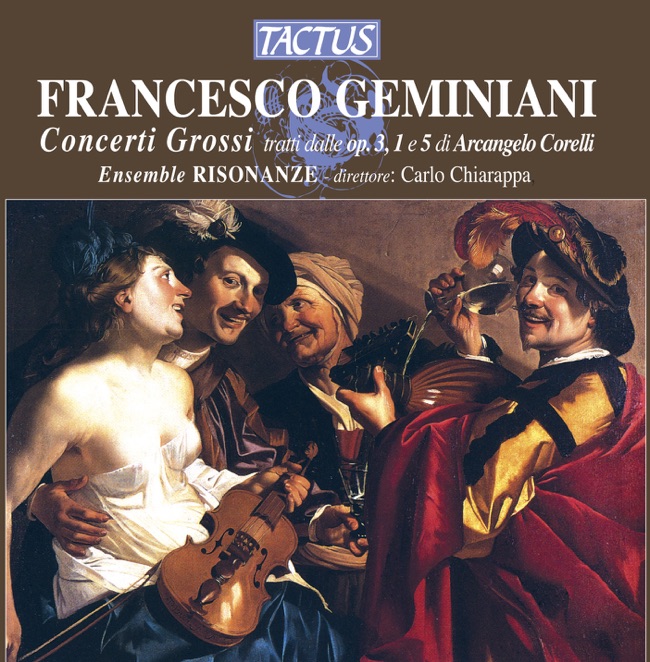
Composer:Francesco GeminianiGenre:ConcertoStyle:ConcertoCompose Date:Nov 22, 1735Publication Date:Nov 22, 1735Average_duration:5:03Francesco Geminiani's Concerto Grosso No. 5 in A minor (after Corelli 3/10) is a Baroque masterpiece that was composed in the early 18th century. The piece was first premiered in London in 1732 and has since become one of the most popular concertos of the Baroque era. The concerto is divided into three movements, each with its own unique characteristics. The first movement is marked by its lively tempo and intricate counterpoint. The second movement is a slow and melancholic adagio that showcases the beauty of the violin and viola solos. The final movement is a fast and energetic allegro that features a virtuosic solo violin part. The concerto is a prime example of the concerto grosso form, which was popular during the Baroque era. In this form, a small group of soloists (the concertino) is pitted against a larger ensemble (the ripieno). The soloists are given the opportunity to showcase their virtuosity while the ripieno provides a rich and full harmonic backdrop. Geminiani's Concerto Grosso No. 5 is based on themes from the works of Arcangelo Corelli, a famous Baroque composer and violinist. Geminiani was a student of Corelli and was heavily influenced by his teacher's style. However, Geminiani's concerto is not a mere imitation of Corelli's work. Instead, Geminiani takes Corelli's themes and transforms them into something new and unique. One of the most notable characteristics of Geminiani's concerto is its use of ornamentation. Ornamentation was a common feature of Baroque music, and Geminiani was a master of this technique. His use of trills, turns, and other embellishments adds a sense of elegance and sophistication to the concerto. Overall, Geminiani's Concerto Grosso No. 5 in A minor (after Corelli 3/10) is a masterpiece of the Baroque era. Its intricate counterpoint, virtuosic solo parts, and use of ornamentation make it a true gem of the concerto grosso form.More....
Works Music