


Jacob Regnart
Missa Freu dich, du werthe Christenheit
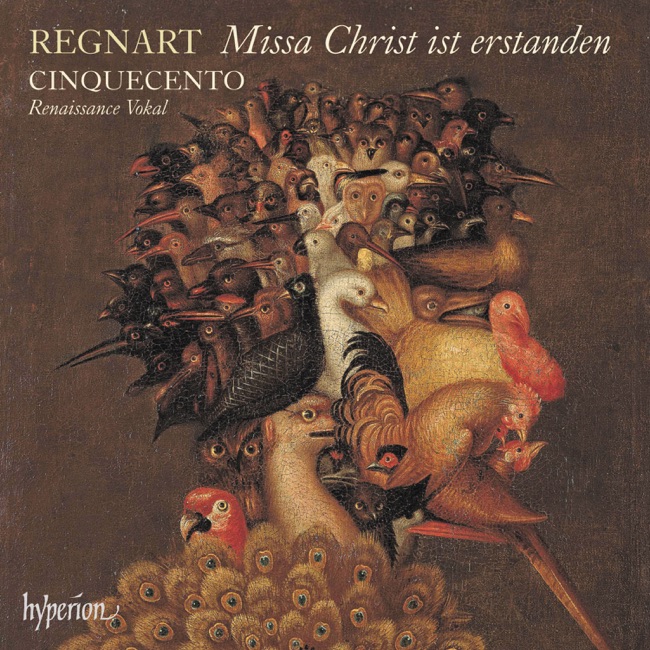
Works Info
Composer:Jacob RegnartGenre:ChoralAverage_duration:26:07Movement_count:14Movement ....Jacob Regnart was a renowned composer of the Renaissance period, born in 1540 in the Netherlands. One of his notable works is the 'Missa Freu dich, du werthe Christenheit', a choral composition that showcases his mastery of polyphonic writing. The composition is believed to have been composed around the late 16th century.$$$The 'Missa Freu dich, du werthe Christenheit' is a sacred choral work that follows the traditional structure of a mass. It consists of several movements, including the Kyrie, Gloria, Credo, Sanctus, and Agnus Dei. Each movement is characterized by its own unique musical elements and expressive qualities.$$$The Kyrie, the opening movement, sets the tone for the entire composition. It begins with a solemn and reverent atmosphere, with the voices intertwining in rich harmonies. The Gloria, on the other hand, is more jubilant and exuberant, reflecting the joyful nature of the text. The Credo is marked by its intricate counterpoint and expressive melodic lines, conveying a sense of devotion and belief.$$$The Sanctus is a majestic movement, featuring soaring melodies and powerful harmonies. It is often performed with a full choir and orchestra, creating a grand and awe-inspiring sound. The final movement, the Agnus Dei, is more introspective and prayerful, with the voices blending together in a gentle and serene manner.$$$Regnart's 'Missa Freu dich, du werthe Christenheit' is characterized by its skillful use of polyphony, a hallmark of Renaissance music. The voices are treated as equals, with each part having its own melodic line and contributing to the overall texture. The composition also showcases Regnart's ability to create intricate and complex harmonies, resulting in a rich and vibrant sound.$$$Overall, the 'Missa Freu dich, du werthe Christenheit' is a testament to Jacob Regnart's talent as a composer. Its expressive melodies, intricate counterpoint, and skillful use of polyphony make it a significant contribution to the choral repertoire of the Renaissance period.More....
Works Music
Featured Music
3
1:21
9
1:53