


Heinrich Ignaz Franz von Biber
Sonata for violin & continuo in E major, C. 108
Released Album
Recent Album
Works Info
Composer:Heinrich Ignaz Franz von BiberGenre:ChamberStyle:Chamber MusicCompose Date:1668 - 1670Average_duration:12:10Movement_count:2Movement ....Heinrich Ignaz Franz von Biber's Sonata for violin & continuo in E major, C. 108, is a Baroque-era composition that was likely composed in the late 17th century. The exact date of composition is unknown, but it is believed to have been written sometime between 1670 and 1690. The sonata is one of Biber's most well-known works and is often performed by violinists today. The sonata is comprised of four movements: Preludio, Allemande, Sarabande, and Gigue. The Preludio is a lively and energetic movement that showcases the virtuosic abilities of the violinist. The Allemande is a more subdued and introspective movement, with a slower tempo and more complex harmonies. The Sarabande is a slow and stately dance, with a mournful quality that is typical of Baroque music. The final movement, the Gigue, is a fast and lively dance that brings the sonata to a rousing conclusion. One of the most notable characteristics of Biber's Sonata for violin & continuo in E major is its use of scordatura tuning. Scordatura is a technique in which the strings of the violin are tuned to a different pitch than their usual tuning. In this sonata, the violin is tuned to E-B-E-A, rather than the standard G-D-A-E tuning. This allows the violinist to play certain passages with greater ease and also creates a unique and distinctive sound. Another characteristic of the sonata is its use of the continuo, which is a group of instruments that provide harmonic support for the soloist. In this case, the continuo consists of a harpsichord and a cello. The harpsichord provides the main harmonic support, while the cello adds depth and richness to the sound. Biber's Sonata for violin & continuo in E major is a prime example of Baroque-era music, with its intricate harmonies, complex rhythms, and virtuosic solo passages. Its use of scordatura tuning and the continuo add to its unique and distinctive sound, making it a favorite among violinists and Baroque music enthusiasts alike. The sonata premiered in the late 17th century and continues to be performed and enjoyed by audiences today.More....
Works Music
Released Music
1
10:52
2
16:31
3
4:48
4
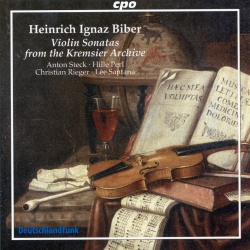
11:49
5
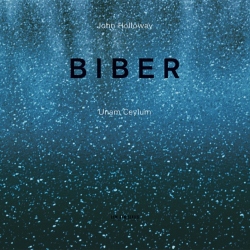
13:16