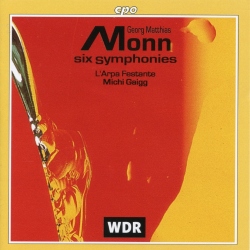
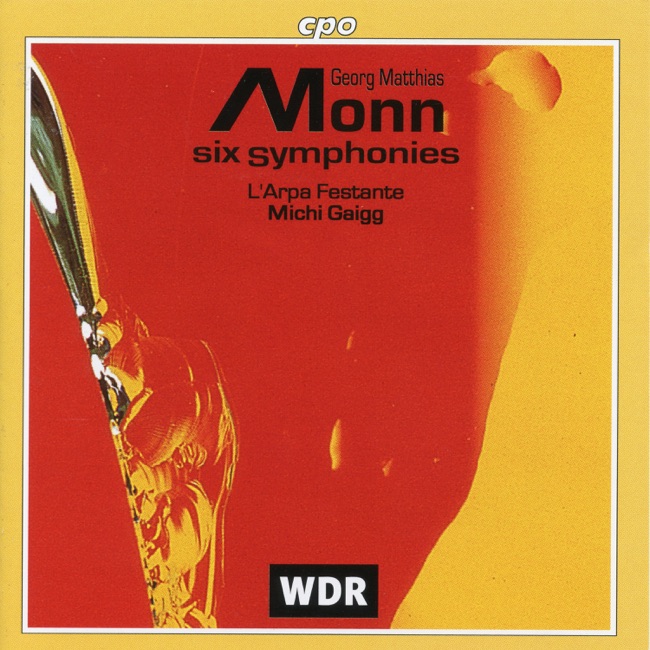
Georg Matthias Monn
Sinfonia in G major
Released Album
Recent Album
Works Info
Composer:Georg Matthias MonnGenre:OrchestralStyle:SinfoniaAverage_duration:9:02Movement_count:3Movement ....Georg Matthias Monn was an Austrian composer of the Baroque era, known for his instrumental music. One of his most famous works is the Sinfonia in G major, which was composed in the mid-18th century. The Sinfonia in G major is a three-movement work that was likely composed for a small orchestra. It was first performed in Vienna in the 1750s and quickly became popular throughout Europe. The first movement of the Sinfonia in G major is marked Allegro and is characterized by its lively, energetic rhythms and bright melodies. The movement begins with a fanfare-like motif in the strings, which is then taken up by the winds and brass. The main theme is then introduced, which is a lively, dance-like melody that is passed between the different sections of the orchestra. The movement is notable for its use of counterpoint, with different melodies weaving in and out of each other. The second movement of the Sinfonia in G major is marked Andante and is much slower and more contemplative than the first. It begins with a simple, lyrical melody in the strings, which is then taken up by the winds. The movement is characterized by its use of chromaticism, with the melody moving through a series of unexpected harmonic shifts. The movement ends with a return to the opening melody, which is played by the strings in a hushed, delicate manner. The final movement of the Sinfonia in G major is marked Presto and is a lively, energetic dance. It begins with a fast, driving rhythm in the strings, which is then taken up by the winds and brass. The main theme is a lively, syncopated melody that is passed between the different sections of the orchestra. The movement is notable for its use of syncopation and its driving, energetic rhythms. Overall, the Sinfonia in G major is a lively, energetic work that showcases Monn's skill as an instrumental composer. Its use of counterpoint, chromaticism, and syncopation make it a notable example of Baroque instrumental music.More....
Works Music
Released Music