Antonio Salieri
La Passione di Gesù Cristo
Released Album
Recent Album
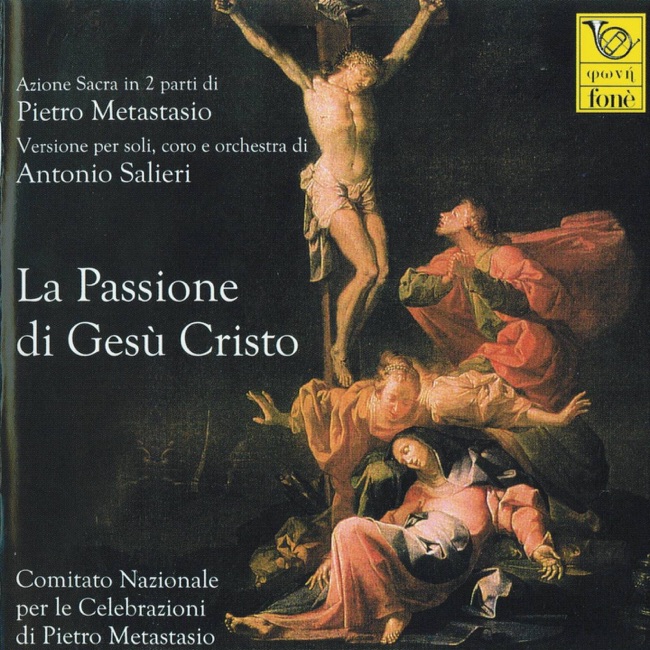
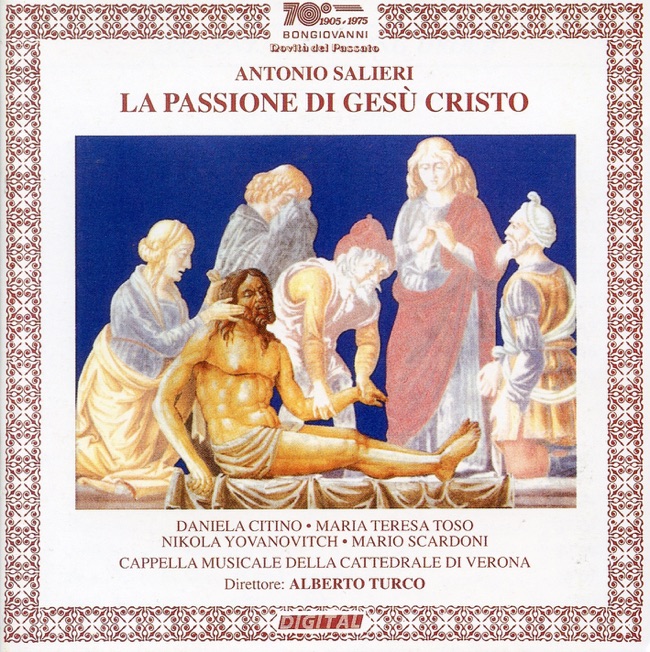
Works Info
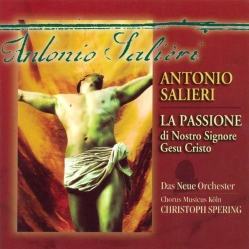
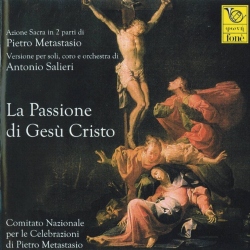
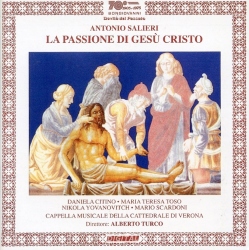
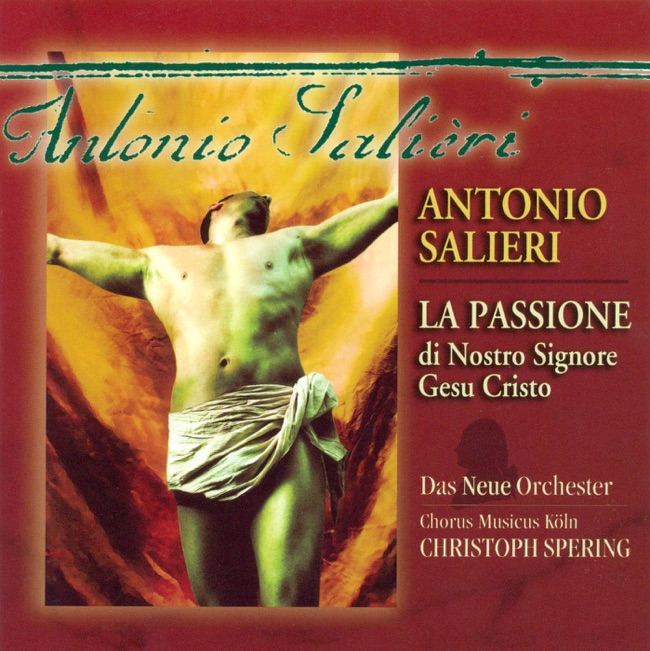
Composer:Antonio SalieriGenre:ChoralStyle:PassionAverage_duration:84:07La Passione di Gesù Cristo is a sacred oratorio composed by Antonio Salieri in 1776. The premiere of the work took place on Good Friday of the same year at the Hofkapelle in Vienna. The oratorio is divided into three movements, each depicting a different aspect of the Passion of Christ. The first movement, titled "The Agony in the Garden," begins with a somber and mournful introduction, setting the tone for the entire work. The choir then enters, singing a prayerful chorus, followed by a recitative by the Evangelist, who narrates the events leading up to Jesus' arrest. The movement ends with a powerful aria sung by Jesus, expressing his anguish and fear in the face of his impending crucifixion. The second movement, "The Trial and Crucifixion," is the longest and most dramatic of the three. It begins with a chorus of the Jewish people, calling for Jesus' death. The Evangelist then recounts the trial and sentencing of Jesus, followed by a series of arias and recitatives sung by various characters, including Pilate, the High Priest, and Mary Magdalene. The movement culminates in a powerful chorus sung by the choir, lamenting the death of Jesus on the cross. The final movement, "The Resurrection," is a joyful and triumphant celebration of Christ's victory over death. It begins with a chorus of angels, announcing the resurrection of Jesus, followed by a series of arias and recitatives sung by the Evangelist and various characters, including Mary Magdalene and the disciples. The movement ends with a grand chorus sung by the choir, praising God for the resurrection of Jesus. Overall, La Passione di Gesù Cristo is a powerful and emotional work, showcasing Salieri's skill as a composer and his deep reverence for the story of Christ's Passion. The oratorio is notable for its use of dramatic contrasts, from the mournful and somber tones of the first movement to the triumphant and joyful tones of the final movement. It remains a beloved work in the sacred music repertoire to this day.More....
Works Music
Released Music