


Georg Philipp Telemann
Quartet for flute, violin, viola da gambe & continuo No. 4 in B minor, TWV 43:h2
Released Album
Recent Album




Works Info
Composer:Georg Philipp TelemannGenre:ChamberStyle:Chamber MusicCompose Date:1736 - 1737Average_duration:19:12Movement_count:6Movement ....Georg Philipp Telemann's Quartet for flute, violin, viola da gamba & continuo No. 4 in B minor, TWV 43:h2, was composed in the early 18th century. The exact date of composition is unknown, but it is believed to have been written between 1715 and 1720. The quartet was premiered in Hamburg, Germany, where Telemann was the director of music for the city. The quartet consists of four movements: an opening Largo, followed by an Allegro, a third movement marked Adagio, and a final Allegro. The quartet is scored for flute, violin, viola da gamba, and continuo, which typically includes a harpsichord or other keyboard instrument, as well as a bass instrument such as a cello or bassoon. The opening Largo is a slow and expressive movement, featuring a lyrical melody played by the flute and violin. The second movement, marked Allegro, is a lively and energetic dance-like movement, with the flute and violin trading off melodic lines. The third movement, Adagio, is a slow and contemplative movement, with the viola da gamba taking on a more prominent role in the ensemble. The final Allegro is a fast and lively movement, with all four instruments playing together in a joyful and celebratory manner. One of the characteristics of Telemann's quartet is its use of counterpoint, or the interweaving of multiple melodic lines. This is particularly evident in the second movement, where the flute and violin play off of each other in a playful and intricate manner. Another characteristic of the quartet is its use of ornamentation, or decorative flourishes added to the melodic lines. This is particularly evident in the flute part, which features numerous trills and other embellishments. Overall, Telemann's Quartet for flute, violin, viola da gamba & continuo No. 4 in B minor, TWV 43:h2, is a beautiful and expressive work that showcases the composer's skill in writing for chamber ensembles. Its combination of lyrical melodies, lively dance rhythms, and intricate counterpoint make it a beloved work in the chamber music repertoire.More....
Works Music
Released Music
1

5:37
2

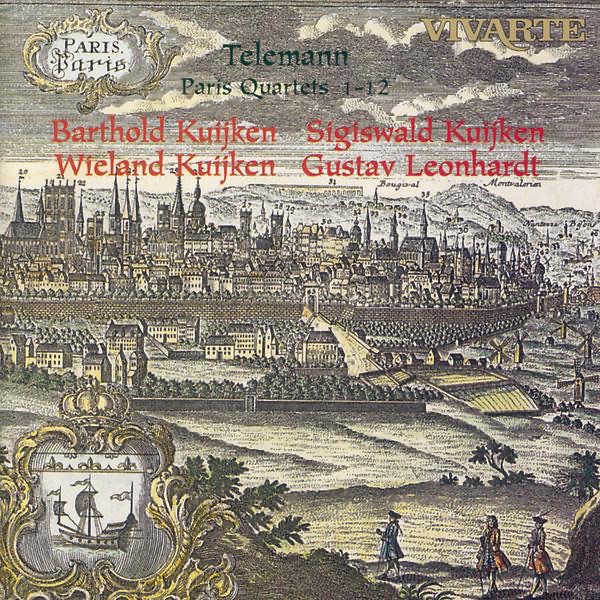
Quartet for flute, violin, viola da gambe & continuo no. 4 in B flat minor, TWV 43:h2
I. Prélude. Vivement - Flatteusement - Vivement
5:36
3

6:1
4
5:48
5
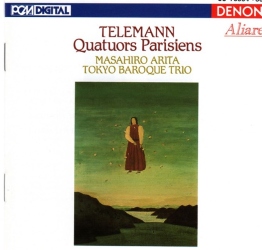
Quartet for flute, violin, viola da gambe & continuo no. 4 in B flat minor, TWV 43:h2
I. Prélude: Vivement --Flatteusement
5:44
6
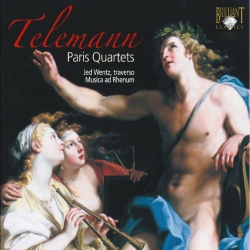
Quartet for flute, violin, viola da gambe & continuo no. 4 in B flat minor, TWV 43:h2
Prèlude vivement-flatteusement-vivement
5:36
7
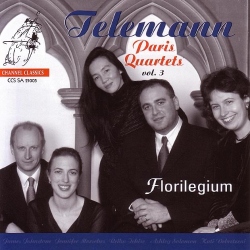
Quartet for flute, violin, viola da gambe & continuo no. 4 in B flat minor, TWV 43:h2
Prelude: Vivement - Flatteusement
6:21
8

3:12
9
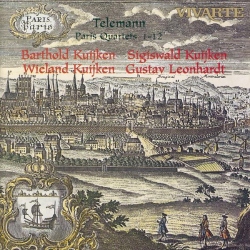
Quartet for flute, violin, viola da gambe & continuo no. 4 in B flat minor, TWV 43:h2
Prélude. Vivement - Flatteusement
6:12