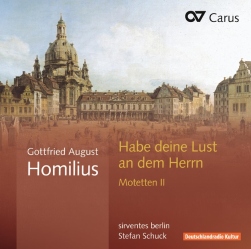
Gottfried August Homilius
Domine, Ad Adiuvandum Me
Released Album
Recent Album
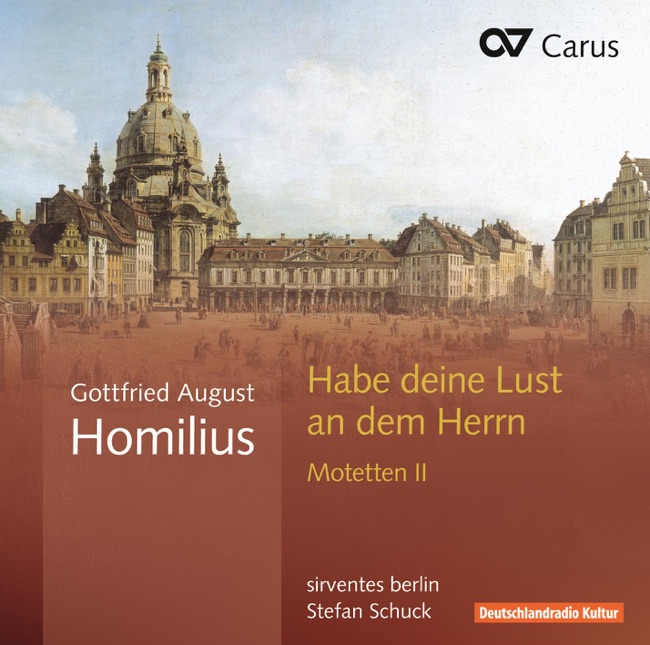
Works Info
Composer:Gottfried August HomiliusGenre:ChoralStyle:ChoralAverage_duration:2:28'Domine, Ad Adiuvandum Me' is a sacred choral work composed by Gottfried August Homilius, a German composer and church musician of the late Baroque era. The piece was composed in the mid-18th century and was first performed in Dresden, Germany in 1755. The work is divided into four movements, each of which is based on a different text from the Latin liturgy. The first movement, 'Domine, ad adiuvandum me festina', is a lively and energetic setting of the opening antiphon for Vespers. The second movement, 'Gloria Patri et Filio et Spiritui Sancto', is a more subdued and contemplative setting of the Gloria Patri, a hymn of praise to the Holy Trinity. The third movement, 'Sicut erat in principio et nunc et semper', is a return to the lively and energetic style of the first movement, and is based on the final words of the Gloria Patri. The final movement, 'Alleluia', is a joyful and celebratory setting of the Alleluia, a hymn of praise and thanksgiving. The characteristics of Homilius' style are evident throughout the work. He was known for his use of rich harmonies, expressive melodies, and intricate counterpoint. The choral writing is often divided into multiple parts, creating a complex and layered texture. The use of dynamic contrasts and rhythmic variety also adds to the dramatic effect of the work. Overall, 'Domine, Ad Adiuvandum Me' is a masterful example of sacred choral music from the late Baroque era. Its lively and energetic style, combined with Homilius' skillful use of harmony and counterpoint, make it a memorable and engaging work that continues to be performed and enjoyed by audiences today.More....